Eating Disorders: Latin@s At Risk

11786767985_fe608fc404_o-e1395339078664

Get the full story at Latino USA.

About ten percent of Americans struggle with eating disorders – that’s true across every ethnicity. But in the Latino community, eating disorders often go under-reported and undiagnosed. There’s evidence to suggest that being multicultural makes Latinos particularly susceptible.

It can be hard for any parent to recognize the signs of an eating disorder, and awareness tends to be particularly low among immigrants and people of color.

Anahi Ortega was 12 when she started developing an eating disorder. A year and a half later, her parents started to suspect something was wrong, “The first clues were weight and my social life and behavior really changed.”

Corazon Tierra recovered from an eating disorder 20 years ago. “My mom was always on a diet to lose weight,” says Tierra, “at a very early age I became very concerned about my weight and by the time I was a teenager, my eating disorder was already in full force.”

GETTING TREATMENT

Sometimes it’s easier for Latino families to acknowledge the issues as a physical problem rather than a mental one.

“My mom would try to feed me home remedies to open my appetite,” says Tierra, “but I refused to do that, I refused to take any home remedies or anything like that.”

But going to the doctor sometimes comes with its own challenges.

“They concluded that I had an eating disorder and brought my parents in to talk to them,” says Ortega, “but it was a little hard because they didn’t speak English and I was the translator and so I was able to share what I wanted.”

There are cultural barriers to seeking help, like the costs of pursuing treatment and the general stigma of mental health treatment. Add to that the pressure of constantly straddling two cultures.

SOCIETAL PRESSURES AT ODDS

“We are supposed to look very skinny and very beautiful and in shape but we’re also supposed to be eating and enjoying food with our loved ones,” says Tierra, “so there’s a double message that is very tense and it creates disruption.”

Dr. Ioana Boie is a professor of counseling at Marymount University. “Someone who grew up in a Latino community where the standards of appearance are related to having a curvier body type, and then goes to a school into a primarily caucasian institution and standards of appearance and eating habits and eating norms are all different and these are all pressures that will put somebody at an increased risk.”

When food is so closely tied with family life, it can take on a whole other meaning. That is to say, eating disorders are never completely about food.

“In my experience the eating disorder started as anorexia but it was hard to maintain because food is such an important part of my culture and it’s always being presented and pushed,” says Ortega.

“I think you receive two types of messages,” says Dr. Boie, “you receive messages that food is fun and celebration and eat eat eat … but when you step out of that culture you’re supposed to be thin now.”

CHOOSING RECOVERY

To get help, Latinos first have to overcome the stigma of getting help.

“I think admitting it within our family will have to force other family members to acknowledge that issue as well,” says Ortega, “we couldn’t do that because we wanted to keep our family in the perfect appearance.”

Because eating disorders are not talked about, many Latinos think they’re rare. Almost half of all Americans personally know somebody with an eating disorder.

“An eating disorder is primarily believed to be a white middle class, or upper class women’s issue,” says Dr. Boie, “that puts Latinos and Latinas at risk for minimizing the fact that they have eating disorder.”

Men are over 10 percent of those with an eating disorder.

“There further is the belief that this is not a serious problem, it is something that will pass,” says Tierra.

But eating disorders never just go away, they have the highest mortality rate of any mental illness. Unlike a purely physical illness, patients can’t recover unless they choose to let go their old habits, which can be really scary.

BUILDING A SUPPORT NETWORK

They need to rely on the people around them for support, even when those people don’t really understand what they’re going through.”

“I had to say ‘it’s not okay when you say que estoy gorda,'” says Ortega, “at times I had to step out of the house and say ‘I have to leave because I don’t feel safe and I don’t feel comfortable with how you’re treating me,”

“It was a messy process really, it wasn’t harmoniously done, but it was done,” says Tierra, “now they know what to say and how to say it and they know how to support me in a better way.”

Even the word for eating disorders in Spanish – trastorno alimentario- is scary. It means something like a mental hurricane. Recovery is a hard road, but with hard work comes hope.

“I had the genes and I had the environment that just triggered the eating disorder at a young age,” says Ortega, “after 10 years I was finally able to find recovery.”

“I have been free of eating disorders for almost 20 years now and I always say that I’m not only recovered, I am healed, because I never went back to that behavior,” says Tierra, “I never felt the need to go back to that behavior.”

Not just recovery, but healing.

If you or somebody you know is struggling with an eating disorder contact the National Eating Disorders Association. You may reach their Helpline at (800) 931-2237..

Photo by Flickr User Zachary Locks

Why Being Latin@ Is An Asset In Tech

95765605-e1386716880751Get the full story at Latino USA

It can be hard for Latinos to break into the field of tech, they often lack social capital and funding. Tech writer Sara Inés Calderon and DIY Girls founder Luz Rivas join Latino USA host Maria Hinojosa for our live show in Austin to talk about these obstacles and why they believe being a Latino is actually an asset in the world of engineering and innovation. Later, Rivas shows off one of the prototypes her young Latina students made – an interactive video game called “Dance Dance Chancla Revolution.”


Photo courtesy of Getty images.

Latino Workers At Risk

92930771-e1392926838511

Get the full story at LatinoUSA.

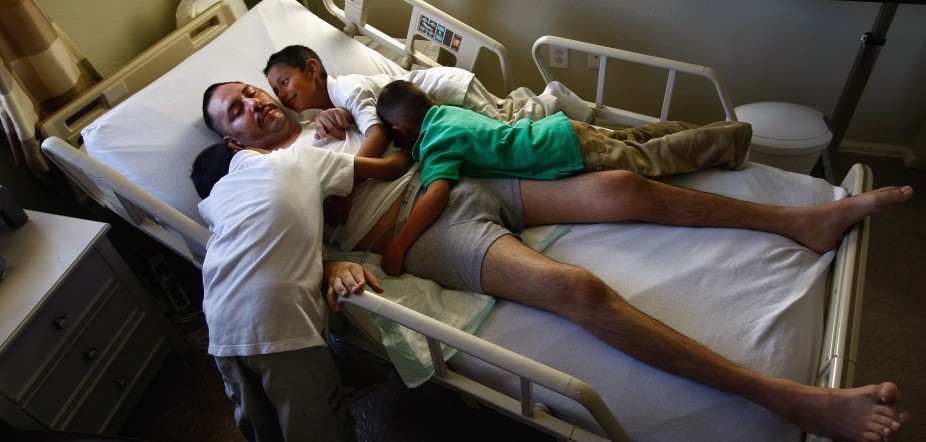
For construction workers, grueling manual labor is just a normal workday, but no one expects to be seriously injured on the job. That was true for Luis Rodriguez. He was a working on a construction site in Texas when he was seriously injured by a drill. “The object cut through my pointer finger from side to side, right at the joint, it completely destroyed my tendons, there was no other solution other than to amputate.”

“I WAS FIRED”

Statistically speaking, Luis was lucky. Latino workers are 14 percent more likely to be fatally injured than all other workers in the country. The number is twice as high for Latino immigrants.

fatallatino

They die in transportation accidents, they face violence on the job, some are injured by equipment like Luis and others suffer falls like Santiago Barrientos.

He was unloading heavy equipment in a Texas factory when he slipped. He felt a pop in his hip and he couldn’t sit, much less walk. He was crying out for help, meanwhile the other workers just laughed at him.

“I asked the boss to make report of my injury, he kept saying that there was nothing wrong with me,” says Barrientos, “The next day the doctor sent me to work, saying I could only 5 to 10 pounds – I was fired.” 3 years and 2 surgeries later, Santiago says he’s spent more on treatment that he ever earned on that job.

“WE’RE UNDOCUMENTED, BUT WE’RE HUMAN”

A recent report by the Labor Council for Latin American Advancement found that these type of workplace injuries are more common with smaller contractors. Those happen to be the companies that are more willing to hire immigrant day laborers.

They don’t always provide the legally required training and safety equipment. Making it worse, immigrants are less likely to report unsafe working conditions. They’re afraid of employer retaliation and deportation. Luis Rodriguez says it’s because they don’t speak English and they don’t know that there’s help for them, “We have the same rights, we’re undocumented, but we’re human.”

It’s not just men who face tough working environments.The American Journal of Industrial Medicine found that Latina housekeepers have the highest injury rate in the country. Especially in the hotel sector, pain and injury are constant. And it gets worse.

Hector Sanchez is the executive director of the LCLAA. “Latinas have the highest levels of death and injuries at work, the highest levels of wage theft,” says Sanchez,“We found in a number of industries a drastic increase in sexual harassment and rape in the workplace.”

INJURED BREADWINNER, HURT FAMILY

When a breadwinner is injured, it affects the whole family. “My family was defeated because I didn’t work,” says Rodriguez, “There wasn’t any cash flow to pay rent, electricity, all that.” Rodriguez is back working now. Barrientos is still recovering, but when he gets back to work, he wants more than just a job. “I want people all over the country to listen to us, to support us, so that there can be good laws for everybody,” says Barrientos.

REASONS TO BE HOPEFUL

There’s optimism in their story too. On the local level, Rodriguez and Barrientos are now activists with the Worker’s Defense Project. Nationally, the Obama administration passed more laws to protect whistleblowers against employer retaliation, even when those whistleblowers are undocumented.

That’s in large part thanks to the work of OSHA and the LCLAA. “We can make sure that we have better working conditions for everybody working, the domestic workers, the restaurant workers, the retail industry, in agriculture,” says the LCLAA’s Hector Sánchez.

The challenge is not just institutional, it’s getting the word out, letting Latinos and Latinas know that even without papers, they have rights.

Photo by John Moore/Getty Images

The Latina Bounty Hunter

Desert_plants_in_Texas-e1392925905166Get the full story at Latino USA

What happens if you don’t hold a Latina back? If she never hears “You can’t do that!” You might get someone like Michelle Gomez.

She’s a skip tracer – she finds people and things who have “skipped” town. Gomez uses public records, online databases, and some old-fashion sleuthing down. And she only takes cases others have been unable to crack. “I’ve always been intrigued by putting things together without instruction, I’ve always put things together easily,” says Gomez, “and I guess I’m special, God gave me a gift.”

Photo courtesy of Flickr user cantroot

msskiptracer

Michelle Gomez is a professional Skip tracer is the owner of Unlimited Recoveries. Gomez specializes in  “hard-to-locate” aka cold cases  – she prefers cases others can’t solve. Similar to a motherboard when it goes dead, she has to figure out out what needs to be repaired or soldered to fix it. Gomez, states, “cold cases are the same; patience, strategy, skills and good intuition”.  She enjoys helping others when they need closure on a case that has been forgotten by others. 

Crisis Pregnancy Centers: Deception or Salvation?

103154610-e1391801105123

Get the full story at LatinoUSA

It’s been 40 years since Roe v. Wade, but the abortion war rages on.

It’s out on the streets, in the courts, in state legislatures.

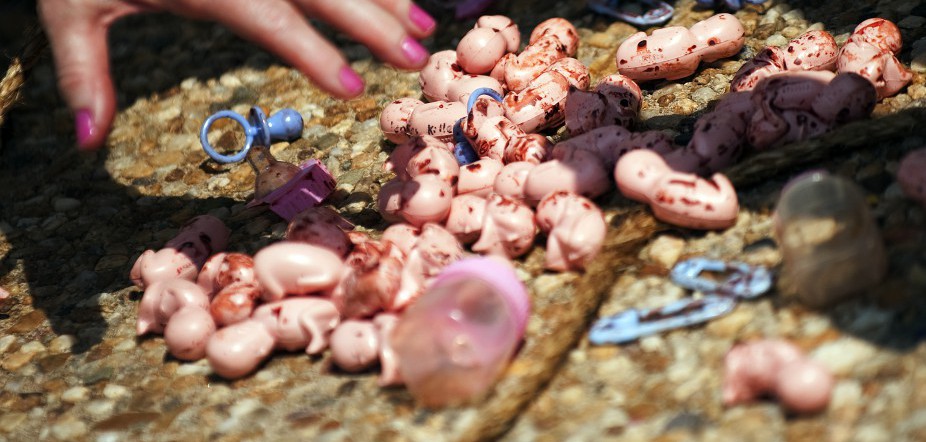
But there’s also a quieter fight going on, in the waiting rooms of Crisis Pregnancy Centers (CPCs), places created to discourage women from getting abortions.

Sometimes called pregnancy resource centers, they are non-profit organizations that generally provide peer counseling related to abortion, pregnancy and childbirth. Some also provide non-medical services like financial assistant or adoption referrals.

The majority of CPCs are run by pro-life Christian organizations.

They have commercials like these all over the country:

Pro-choice organizations like Planned Parenthood for posing as medical facilities, and using intimidation to disseminate false medical information to clients.

“IT WAS A LOT OF SLUT SHAMING”

Feminist writer Jaclyn Munson went undercover to a crisis pregnancy center in New York City.

“A woman walking into this facility would definitely think this could be a medical facility,” says Munson, “there were white lab coats, they did have the model fetuses out, they did have a lot of pamphlets that looked like medical pamphlets.”

Munson says she was quickly ushered into a room to talk privately with a counselor who told her she was too pretty to be having sex before marriage.

“They build up a great trust with these women, they’re really nice, they’re really friendly, but at the end of the day, you’re a slut who got pregnant and we have to help you so that you never get in this situation again.

But pretty soon, according to Munson, it went from slut shaming to outright misinforming.

“It was a lot of heavy lecturing about breast cancer being implanted in breast cancer and these things that have been scientifically refuted.”

Munson’s experience inside a CPC is echoes the findings from undercover investigations conducted by NARAL Pro Choice chapters all over the country.

A GODSEND TO WOMEN IN NEED
Rai Rojas, Latino Outreach Director for Right To Life, defends the crisis pregnancy centers’ practices.

These resources are a godsend for a pregnant woman in need, says Rojas, “We hook her up with food stamps, aid from the state, the city and the federal government.”

And Rojas insists, the CPCs aren’t set up to mislead women.

“Crisis Pregnancy Centers aren’t set up to be health care centers, we’re there to provide information that they do not receive at abortion clinics,” says Rojas.

WHERE DOES THE LAW STAND?
But the New York City Council didn’t see it their way.

In 2011, it passed a consumer protection law requiring CPCs to openly specify the services they don’t provide and to disclose whether or not they have a medical doctor on staff.

“The law we passed here in this city is pretty simple,” says former New York City Council Speaker Christine Quinn, “It says, ‘say what you are, say whether you’re a medical office, say if you provide abortion services, say if you provide emergency contraception.'”

The American Center for Law And Justice, which is like a Christian version of the ACLU, argued that the law was violating the crisis pregnancy center’s First Amendment rights.

A federal court first blocked the law, but in January, most of it was upheld by a federal appeals court.

Both sides interpreted this as a victory.

Now, the centers don’t have to disclose whether they provide referrals for emergency contraception, abortion or prenatal care.

“They sided for the most part on the side of the crisis pregnancy centers and said you can’t legislate freedom of speech,” says Rai Rojas from Right to Life, “It’s guaranteed in the first amendment that we can say pretty much what we want and the government can’t prohibit us from saying what we need and want to say.”

But they do have to say whether or not they have a doctor on staff, what kind of services they don’t provide, and they have to protect their clients’ privacy.

“A woman has a right to know when she walks into an office if it’s a medical facility or it’s not,” says former New York City councilwoman Jessica Lapin, “these women give incredibly personal information to these centers and this bill requires them to treat that confidentially.”

NO CLEAR WINNER OR LOSER
More than two dozen crisis pregnancy centers are still operating in New York City: And their day-to-day looks pretty much the same.

During the appeals court hearing, the CPCs admitted to purposefully setting up shop as close as possible to registered women’s health clinics.

They also place Spanish-speaking volunteers out on the street to usher Latina women into their doors.

It’s a moral war they’re waging, says Rojas.

“I’ll make it easy for you, the single most dangerous place for a Latino in these United States today is in his mother’s womb.”

And as long as they believe that to be true, this fight’s not going anywhere.

Our #LatinoViews Twitter Chat

114986186-e1390513107905

Get the full story at LatinoUSA

Latinos make up a trillion dollar market and American companies are eager to cash in

Some are learning how to target that economic powerhouse by understanding the complexity of Latinos — we aren’t just one monolithic group of Hispanics!

Example: Just think about how many different types of Goya beans you see in the supermarket!

We don’t all eat the same thing, and we don’t all think the same way.

This week we hosted a #LatinoViews Twitter chat with NPR’s Code Switch blog about their landmark poll measuring Latino attitudes.

The poll is unique because it solicited responses from nearly 1,500 Latino Americans. The sample size was big enough to divide answers by subgroups – it took ethnic ancestry into account and it separated immigrants from non-immigrants.

The problem with the poll it can only give you multiple choice answers. Do you identify as Hispanic or Latino? Do you feel optimistic? Have you been discriminated against?

But it doesn’t give respondents the opportunity to answer WHY they feel the way that they do.

That’s why we took to social media for a 1-hour long conversation about the poll’s findings.

Here are some of the best moments from the Twitter Chat we hosted with NPR’s Code Switch blog.

Running Tips From A Latina All-Star

B2_RunningTips_Feature_NewBalance-470x140

Get the full story from Latino USA.

How do you embark on an adventure? Take it one step at a time!

Next month, Maria Hinojosa is doing something she’s never done before — training for a race! Ahead of her first 5k, we called all-star runner Brenda Martinez for some training tips.

 Photo courtesy of New Balance. 

B2 Running Tips_Headshot_BrendaMartinez_Getty

At the recent IAAF Track & Field World Championships in Moscow, Brenda Martinez became the first American woman to win a medal in the 800m. She ran her personal best and won the bronze medal. Martinez, 25, is from Rancho Cucamongo, CA and the only Latina on the national track and field team. Martinez started running at five years old and became the first person in her family to go to college when she attended UC-Riverside. She won the 2009 NCAA Outdoor Championship in the 1,500m and was a three-time NCAA All-American. Photo courtesy of Getty Images. 

How Does Your Latino Family Celebrate Thanksgiving?

TurkeyThighMoleSPA-470x140

Get the full story from Latino USA.

Latinos have a way of making American traditions all their own. We asked our listeners on Twitter and Facebook, “How does your family add some Latino flair to Thanksgiving?” I joined Latino USA host Maria Hinojosa in the studio to share our their responses.


Photo courtesy of Alejandro Linares Garcia, Wikimedia Commons

Organizing Domestic Workers

C2_NatDomWorkers_FeatureFoto_CreditDignidadRebelde-470x260

Get the full story from Latino USA.

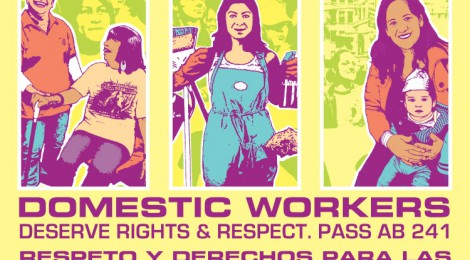
This year, California passed a Bill of Rights protecting domestic workers. New York and Hawaii have passed similar bills. But what is going on in the other 47 states? Andrea Cristina Mercado is the campaign director for the National Domestic Worker Alliance. She joins host Maria Hinojosa to talk about how the legacy of slavery makes it difficult for domestic workers to organize and how despite obstacles, the domestic worker movement has grown.

Photo courtesy of Dignidad Rebelde. 

C2_NatDomWorkers_Headshot_AndreaCristinaMercado_Credit_National Domestic Worker Association
Photo courtesy of National Domestic Workers Association.

Andrea Cristina Mercado is the daughter of South American immigrants, the mother of two small girls, and the new Campaign Director at the National Domestic Worker Alliance. For the past eight years Andrea has been organizing at Mujeres Unidas y Activas (MUA), a grassroots Latina immigrant women’s organization in the San Francisco Bay Area. She is one of the co-founders of the National Domestic Workers Alliance and has played a leadership role in building and coordinating the California Domestic Worker Coalition, a statewide effort to include domestic workers in labor laws.

Art Behind Cages

B2_PAÑOART_FEATURE_NOCREDIT-470x260

Get the full story at Latino USA.

Even though you might be living behind bars, the desire to create still lives inside you. You’ll grab whatever materials you can find and make something to pass the time, to express your fears and to make a statement about your life. In the 1990s, Chicano prisoners in San Antonio, Texas, took square pieces of cotton, called Paños, and created elaborate scenes with ballpoint pen. Some curators now recognize them as folk artist.

Maria Hinojosa went to the home of David Joralemon, a New York art collector and spoke to curator Martha Henry. Part of David’s collection is currently on tour in Venice.