Rodeo’s Barrel Race Puts Women In The Saddle

Get the full story at NPR. 


The Houston Livestock Show and Rodeo is one of the biggest rodeos in the world. Rodeo athletes come from all over the U.S. and Canada to compete for some of the biggest cash purses in the sport. And it’s not just cowboys in the ring. Cowgirls compete in the sport of barrel racing, where they trace a looping pattern on horseback against the clock.

Three empty oil drums are set up in a triangle 60 feet apart. The cowgirl, on horseback, darts out of the gate and runs tight loops around each barrel in a clover-leaf pattern. The turns are so fast that the horse looks like it’s at a 45-degree angle. There’s a five-second penalty for knocking over a barrel. The riders compete one by one, the fastest time wins. It’s fast, and it’s dangerous.

Christy Loflin is a professional barrel racer from Frank Hills, Colorado. She’s wearing jeans tucked into western boots and a black cowboy hat. Loflin got into the sport 14 years ago. She had been showing horses all her life when she met her husband, a professional rodeo athlete. She wanted to compete too. She says it’s hard work. There are long hours and a lot of losses before you get any wins.

She says it takes a tough person to rodeo, “not only do you have to have an amazing horse, but you have to be an amazing rider and be super talented. So, I think that is pretty inspiring to a lot of little girls, to try really hard and to keep come up through the ranks.”

There’s something else Loflin finds inspiring. Rodeo might be a male-dominated sport, but in the ring, women get equal pay. A win in the first round will get you $1200. The grand prize winner walks away with $50,000. That’s the same amount the ropers and bull riders get.

Loflin says it’s a dangerous sport. You can get knocked off your horse, stepped on, it can fall over while you’re still in the saddle. But her hard work just isn’t enough tonight. Her loop around the first barrel was a hair too wide and cost her a few seconds. She placed seventh out of eight. Christy Loflin has two more chances to advance to the finals here, but if she doesn’t make the cut, she can earn money by winning smaller rodeos throughout the year or focusing on her primary source of income: selling horses to other barrel racers.
Women Enlistees Use Video Blogs To Share Advice With Other Recruits

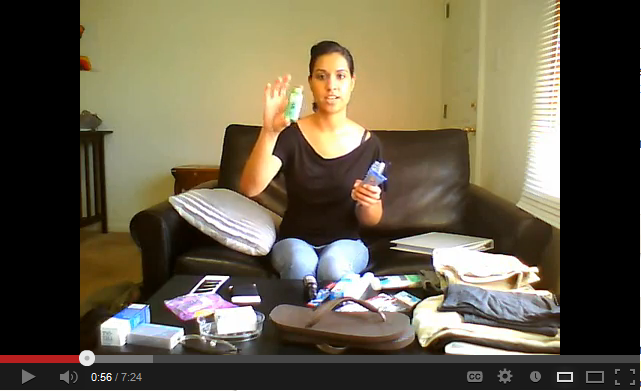
Dolly Marie Spice shares her boot camp packing list with her 2,000 followers.

Get the full NPR story

In today’s volunteer force, when women sign up, they may have questions about military life that are different from the ones men would ask. Many female recruits turn to video blogs for advice.

Dolly Marie Spice is a senior airman in the Air Force Reserves. When she first enlisted, she was looking for a little advice and not just about hair styles. She turned to YouTube and even there, her search turned up empty. So she started blogging about her own experiences. So far, she has made 30 videos where she talks to her 2,000 followers.

Usually, when recruits want to find out what life in the military is really going to be like, they go to their recruiter. But women who are signing up face different challenges, have different questions and men don’t always have the answers.

Sergeant Bridget Jackson works in an Army recruiting station in Largo, Maryland. All the female recruits in the area get forwarded to her. She says they tend to be very inquisitive.

“They want to know how do I feel about leaving my family; are we able to wash our hair and take a shower. And I don’t know what myths they heard of but they want to know, as a female, if I’m out there in Afghanistan, am I out there in the middle of nowhere not taking a shower”.

Her newest recruit, Erica Mason, has those doubts, too, though she’s not completely uninitiated; she comes from a military family and she did Junior ROTC. That means she’s ready for the culture shock. But she’ll be away from her two kids for 17 weeks. When she talks to her husband, a retired Marine, there are things he just doesn’t understand.

“I always tell him, you went in right after high school. You had no family. You’ve never left kids that you gave birth to or your spouse. That’s pretty much like nothing that anybody can understand, unless you went through it and you’re a mom and you left your kids for boot camp or you left for deployment or something. Nobody understands”.

Sergeant Jackson, her recruiter, understands. She was a single mom when she deployed. Now she talks to her recruits about everything, from how she used to get her nails done on base in Afghanistan to how she advanced in her military career.

She describes herself as a hot commodity. The men in her recruiting office can’t do what she does. In her company of 40 soldiers there are only three women.

That means most women have men for recruiters. So when they want advice from women already in the military, they go online to interact with bloggers like Spice.

There are more than 20 other bloggers like her on Youtube. They’re from every branch of service, active duty and reserves. They answer private questions and offer support. Video bloggers aren’t recruiters but they fill a void for women signing up with questions about everything, from what to do with their hair to how to say goodbye to their kids when they go off to war.

Inaugural Smartphone App Could Be Helping Mine Data For Democrats

The Presidential Inagural Comitee released an App that could be mining data for Democrats

Get the full NPR story

The Presidential Inaugural Committee recently released a smartphone app to help people follow the day’s events in real time. It has maps of the parade route, volunteer opportunities and real-time updates. As NPR’s Brenda Salinas reports, it also has an invisible feature that could help Democrats mine data from users.

It’s the first app you see when you open the iTunes store: Inauguration 2013. The welcome page asks for your phone number. Below that, a link to terms and services. You can skip both and go straight to the features.

And it’s pretty good, according to Jason Brookman. He’s the director of consumer privacy for the nonprofit Center of Democracy and Technology. He likes the app’s features but not its terms of service. That link – the one most users probably ignore – takes you to a document on the committee’s website, and it’s the website that opens up a loophole for Brookman.

“So it says, We may collect email addresses and cell phone data and, you know, your location information, and we reserve the right to sell that to or give it to other candidates and to use it in, you know, ways that you might not necessarily expect when you’re just trying to install an application to, you know, to figure out where to go on Inauguration Day.”

The Presidential Inaugural Committee would not comment publicly, but it did defend its app in a statement, saying it had no way to collect emails, names or other personal information. It also defended the terms of service on its website, saying it’s appropriate for a president’s inaugural committee to support and reflect their party’s ideals and causes. And that’s a problem, says Brookman. The app links to services like Facebook, Twitter and its own website where the rules aren’t so clear.

App data-mining iscatching the attention of both parties. Dan Morgan is a GOP fundraising consultant. While he doesn’t like the idea of data-mining apps, he says we’ll be seeing more of them, from Democrats and Republicans.

“We’re a pack of dogs in this business. Whatever one does, the other one wants to quickly follow. And I can guarantee Republicans are out there looking at what the Democrats are doing and saying: Hey, how do we do the same thing?”

Morgan predicts a future where political groups mine more data than Google. Campaigns will make special apps for town halls and public appearances, and then the data will be mined for fundraising. To him, this is just the tip of the iceberg.

Christmas A Busy Season For Tamale-Makers

Lauren Rock/NPR
Ofelio makes tamales in his home
Lauren Rock/NPR


Get the full NPR story

For Christmas, Central and Mexican-American families don’t crave a holiday turkey; they want a plate of steaming hot tamales.

Gustavo Arellano, author of the book Taco USA: How Mexican Food Conquered America, says that to him, tamales are more than food. They transmit Latino culture during Christmas.

“It is about sustenance, but not just in the nutritional sense. It’s also in a community sense. It’s also in a spiritual sense,” he says. “It’s the ultimate Christmas gift.”

But making tamales is a time-consuming endeavor. It can take a whole day to make a single batch. That’s why many families prefer to buy tamales in bulk for special occasions.

Good tamales, though, don’t come from a restaurant. They have to be caseros, that is, homemade. And so many families turn to tamaleros — men and women who make tamales for a living — to get their fix.

Ofelio Crespo is a tamalero who lives in Washington, D.C. He is usually out of bed by 5 a.m. and spends his mornings making gallons of salsa on his stove to pair with his tamales.

Lauren Rock/NPR
Ofelio Crespo makes tamales in his home all year, but December is particularly busy.
Lauren Rock/NPR

He makes a red salsa for chicken tamales. The vegetarian option uses hot peppers and cheese. But his specialty is the green salsa he cooks for pork tamales — it’s a mix of jalapeno peppers, poblano chilies, onions, garlic and spices.

Crespo grills the meat at night and prepares the tamales with his family in the evening after making his deliveries. The kitchen has a second refrigerator to keep the ingredients fresh. A big bowl of cornmeal dough called masa sits in the middle of the dining room table. The stove is on all day.

Assembling the tamales is an art form. Crespo starts by washing the cornhusks that will encase the tamales in the kitchen sink. He then takes a golf-sized ball of dough from the bowl, flattens it with a tortilla press and beats it down onto the cornhusk. He puts meat and salsa in the middle of the masa and folds the tamale in place.

He and his children do this approximately 900 times a week.

Tamales are a comfort food for Central and Mexican-Americans, and recipes vary from region to region. In Michoacan, they come in triangles. In Oaxaca, they’re made with beans. Tamales salvadorenos are wrapped in banana leaves instead of corn.

Crespo’s tamales are in the style of the Mexican southern state of Guerrero where he was born. He sells them all year, but December is his busiest month. The Feast of Our Lady of Guadalupe on Dec. 12, Nochebuena on Dec. 24 and New Year’s Eve wouldn’t be complete without tamales.

There might also be another factor in their popularity. “We get more people asking for tamales because it’s colder outside. People want something hot in their stomachs,” says Crespo’s 20-year-old-son, Romelio, who, along with his younger sister Maria, helps his dad with the cooking.

Lauren Rock/NPR

Crespo assembles tamales in his kitchen in the evening.
Lauren Rock/NPR

Crespo started making tamales for friends in his church group eight years ago. After a few months, he was getting big orders on a regular basis. His primary client base remains the Spanish-speaking congregation in his church, but Crespo says he is always getting referrals.

Many higher-class families who move to the U.S. find that a family cook is no longer in their budget. They still crave traditional food, but they might not know how to make it themselves. That is when the door opens for Crespo and other tamaleros.

The tamale market is usually an informal network that expands by word of mouth. But Crespo wants his business to grow. He’s getting financial counseling and plans to rent out an industrial kitchen and later buy a food truck he’ll name “Mexican Cowboy Tamales.”

Some families come together for tamaladas, tamale-making gatherings. But Crespo insists his tamales have sabor, a special taste. No one makes tamales like his, he says. And once you taste them, you won’t even try.

Atheists Join Religious Groups In Giving Sandy Hook Support

Bbjeter
The Sandy Hook Elementary School makeshift memorial on Berkshire Road in Newtown, CT.
Bbjeter/Wikimedia Commons

Get the full NPR story

In the wake of the Sandy Hook shooting, a number of religious charities offered their assistance. Now, a coalition called Atheists Giving Aid wants to raise $50,000 to help pay for funeral costs and counseling services for the victims.

Amanda Brown is an activist. She runs a campaign called We Are Atheism. She calls it an “it gets better” campaign for atheists. When she heard about the shooting on the news, she wanted to help in whatever way she could.

“I found out about what happened just like everyone else. I was out with my 4-year-old daughter, and I just looked down at her – and it would just be devastating and heartbreaking. And, you know, there’s Christmas presents under the tree for these children. The parents did not plan for such a young child’s funeral.”

Brown enlisted the help of her graphic-designer husband, and her friends in the atheist community. They made a fundraising website, and promoted it on Reddit. It’s called Atheists Giving Aid. So far, they have raised $18,000. Their goal is 50,000.

Changing Public Perception

One of their partners is American Atheists Inc. Amanda Knief is their managing director. She says this initiative fits right into their charitable mission. They have been raising money for people in need since Hurricane Katrina.

“We were often, as a community, accused of being uncharitable when really, there was just no way for us to show that we were already contributing. And so we started looking for a way to demonstrate that we did care, by doing it as a community. And as natural disasters or tragedies have occurred, we have pulled together as a community; to do things.”

Knief hopes that more public charitable giving will help change the perception of atheists. Ed Buckner isn’t so sure that will work. He’s a former president of American Atheists. He thinks the best way to affect public perception is through modeling good citizenship. He is all in favor of giving money to good causes, but he day-to-day interactions with Atheists will have more of an effect in changing public opinion. Regardless of perception, he hopes that community leaders will start to include the nonreligious in moments of tragedy.

For Vets That Lived WWII, Time Short To See Memorial

Yesterday was the anniversary of Pearl Harbor, the attack that launched the United States into the Second World War. Of the original 16 million service members, only two million are still alive. And a group of them traveled from all over the country to visit the national memorial yesterday. Brenda Salinas has this report.
Jim Hardwick has traveled a long way to get to D.C. He’s come to all the way from Dallas, Texas for one purpose: to see the World War II memorial.

It’s a cloudy December day. It’s cold, but he doesn’t seem to mind. This memorial is a special place for him. He saw it for the first time two years ago and he’s happy to have a second visit.

“I think it’s beautiful. Inside there on the walls are some of the battles I was in.”

Jim has 17 grandchildren. They haven’t been to the memorial yet, but he knows that one day they’ll come here and remember him. “They’ll say, oh, my granddaddy was there. That’s what they’ll say.”

Jim hopes that they’ll remember his stories too. He was only 17 when he enlisted in the Navy. He says he was trying to escape the Great Depression, he wasn’t expecting the Great War.

At the time, war was raging in Europe, but the U.S. had only been in a few Marine skirmishes to protect merchants. “I got my orders to go aboard the USS Honolulu in Pearl Harbor, Hawaii. And I said whoopee. I couldn’t get further away from the danger than Pearl Harbor.”

Seven months later, Jim went to a luau on a nearby beach to celebrate his 18th birthday. He woke up the next day to the sound of explosions, confusion, shouting. He was ordered to return to his ship. On the way, he saw the damage from the torpedo attack: four ships sinking, solid black clouds and flames, the smell of fuel oil burning. He made his way back to his damaged ship. The attack was over. But the war wouldn’t be over for another four years.

“Pearl Harbor was only the beginning of World War II for me. My ship participated in so many things in the Pacific that were greater in my mind than the attack on Pearl Harbor.”

As much as Jim appreciates the annual day of remembrance, he wants people to remember that Pearl Harbor was only one day in a very long war. He hopes to visit the memorial again someday. He is 89.

Beauty Pageant Economics: The Sash Isn’t Cheap

Coburn Dukeheart/NPR
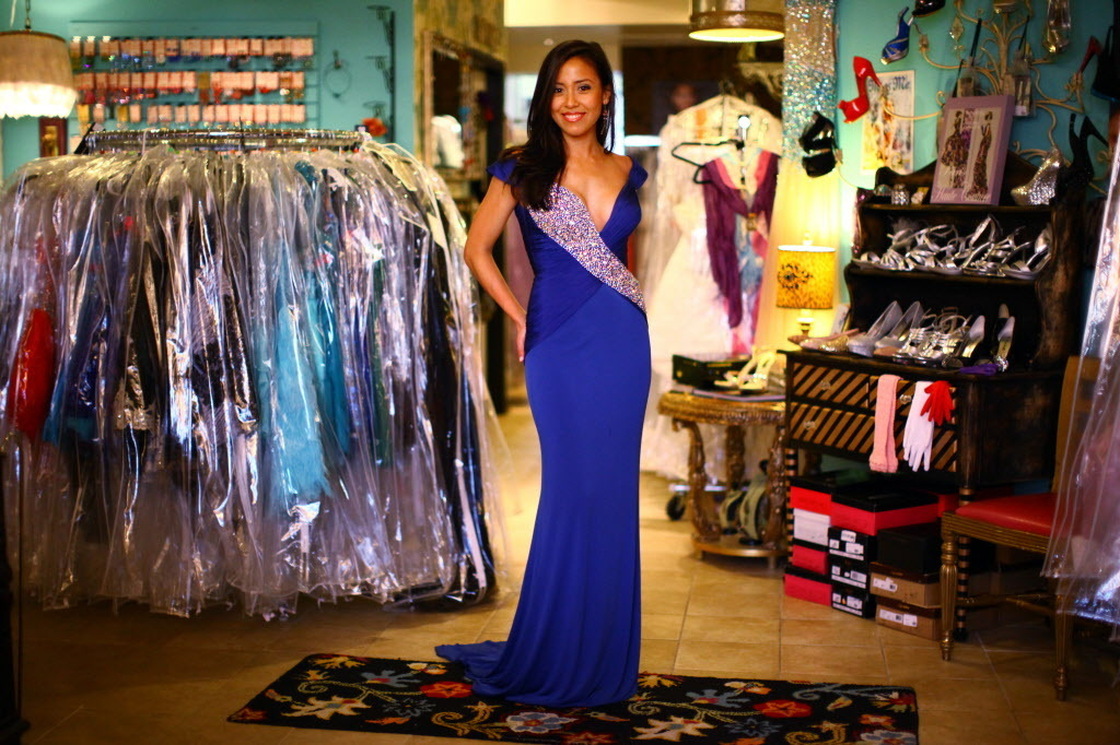
Jessica Bermudez, 24, models a dress at Deja Vu in Alexandria, Va. Bermudez is competing for the title of Miss District of Columbia USA, and says she regularly enters beauty pageants.
Coburn Dukehart/NPR

Get the full NPR story

Miss America’s walk might look effortless, but her road to success probably cost more than you think.

Ten-thousand women will compete in a Miss USA-sponsored pageant this year. That organization is just one of more than 15 small circuits, each with its own local, state and national competitions. It’s a big industry. From the organizers, designers and coaches, lots of people make money — except the contestants.

Twenty-four women are in the running to become the latest Miss District of Columbia USA.

When competitor and graduate student Jessica Bermudez went to Deja Vu, an Alexandria, Va. boutique specializing in pageant gowns, the price tags were as dazzling as the dresses.

Store manager Derek Ferino pulled out a gown for Bermudez to try on — a floor-length royal blue number with rhinestones on the front. The price tag: $3,000.

Bermudez, 24, won’t say how much she paid for the dress she eventually chose, but Deja Vu’s evening gowns start at $700. Some cost as much as $4,000.

If you thought Bermudez’s parents are signing the check, you’d be wrong. She uses the money she earns working part-time at as a technical project manager at the National Institutes of Health to pay her way through the pageantry world.

Bermudez also gets sponsored by local businesses in exchange for promoting their products, and she spends a lot of time fundraising.

Coburn Dukeheart/NPR
Beauty pageant contestants often need multiple pairs of shoes, like these seen at Deja Vu, per pageant to accompany different outfits. That alone can get pricey.
Coburn Dukeheart/NPR

A Costly Crown

Carl Dunn, CEO of Pageantry magazine, says pageants are big business.

“First of all, you have the event itself, that’s what you’re looking at,” Dunn says. “Then behind that, you do have the designers, makeup artists, trainers, facilitators, possible sponsors.”

Victory Mohamed, the current Miss Baltimore and third runner up in this year’s Miss Maryland America competition, works as a pageant coach. She says if you want to compete seriously, you need to be prepared. And that means money.

“If you’re doing it right, you would have to spend at least $500 to $2,000 on a gown for a U.S.A. Pageant, $200 for an interview outfit, including accessories, shoes that whole thing, and $50 to $300 on a great swimsuit,” Mohamed says.

That’s just the clothes – not even the makeup. And then there’s coaching, which can range from $40 to $300 per hour. Mohamed charges $50.

“But I think, doing it right, I would definitely invest in the coaching, in the fitness trainer, in the makeup, in the outfit,” she says. “You can’t get to Miss America or Miss Universe without doing it right, doing it all the way.”

It can pay off though. Mohamed says she won a scholarship that helps her pay for graduate school. Pageants also helped launch her professional pageant and image consulting company that she runs out of her basement studio.

‘Well Worth It’

If Bermudez can persuade the Miss D.C. judges to give her the crown, she’ll win a cash price of about $1,000 and the opportunity to compete for the title of Miss USA next summer. But even if she doesn’t win, she says competing in Miss D.C. USA is a great investment.

“You get experience with public relations and getting your message out there,” Bermudez says. “My personal message is to promote STEM — Science, Technology, Engineering and Mathematics — so I think it’s very well worth it.”

Bermudez says she feels confident about her chances.

“You always go in with high hopes,” she says. “You go in as prepared as you can, but you never go in expecting anything.”

It seems like the only thing all the contestants can expect is a hefty price tag.