High-End Stores Use Facial Recognition Tools To Spot VIPs

Get the full story at NPR

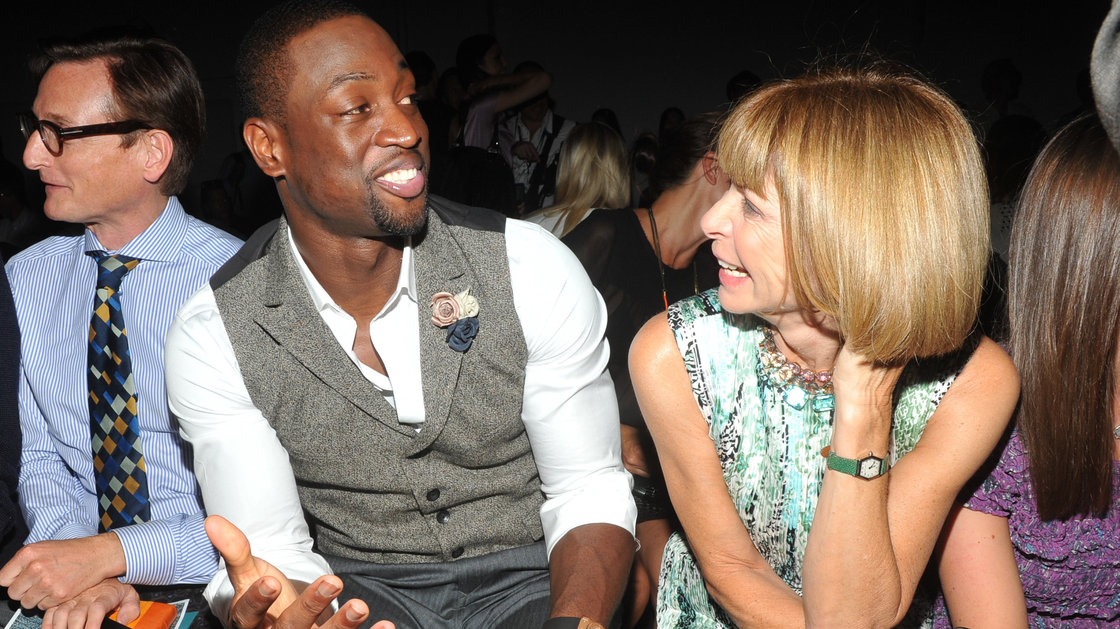
Hey, isn't that ...? New facial recognition software is designed to help store employees recognize celebrities like Mindy Kaling — and other bold-faced names.
Hey, isn’t that …? New facial recognition software is designed to help store employees recognize celebrities like Mindy Kaling — and other bold-faced names.

When a young Indian-American woman walked into the funky L.A. jewelry boutique Tarina Tarantino, store manager Lauren Twisselman thought she was just like any other customer. She didn’t realize the woman was actress and writer Mindy Kaling.

“I hadn’t watched The Office,” Twisselman says. Kaling both wrote and appeared in the NBC hit.

This lack of recognition is precisely what the VIP-identification technology designed by NEC IT Solutions is supposed to prevent.

The U.K.-based company already supplies similar software to security services to help identify terrorists and criminals. The ID technology works by analyzing footage of people’s faces as they walk through a door, taking measurements to create a numerical code known as a “face template,” and checking it against a database.

In the retail setting, the database of customers’ faces is comprised of celebrities and valued customers, according to London’s Sunday Times. If a face is a match, the program sends an alert to staff via computer, iPad or smartphone, providing details like dress size, favorite buys or shopping history.

The software works even when people are wearing sunglasses, hats and scarves. Recent tests have found that facial hair, aging, or changes in weight or hair color do not affect the accuracy of the system.

The technology is being tested in a dozen undisclosed top stores and hotels in the U.S., the U.K., and the Far East. NEC hasn’t responded to NPR’s requests for an interview, so it hasn’t addressed why the stores that are testing the software are staying quiet about it.

Privacy Questions

Manolo Almagro, senior vice president of digital for retail agency TPN Inc., says the technology isn’t new, it is just a more sophisticated version of Google Images, which allows users to find photos that are similar to other images. But, he says, facial recognition verges on dangerous territory — Google had to remove facial recognition software from Google Glass over privacy concerns.

When Nordstrom disclosed that customers were being tracked through Wi-Fi signals on their smartphones, the retail chain faced serious backlash and had to stop. Brick-and-mortar stores are juggling privacy concerns with wanting to increase their revenue through analytics-based marketing.

Chris de Silva, vice president of IT Solutions at NEC, told the Sunday Times that the company had addressed privacy concerns and found that most high-profile customers are “quite happy to have their information available because they want a quicker service, a better-tailored service or a more personally tailored service.”

Too Gimmicky?

But retail consultant Almagro says the service is gimmicky — and not very cost-effective.

“There are so many easier ways to use things like a mobile phone, which everyone already has, in a retail location and do the same thing and actually get more information,” he says.

Stores like Family Dollar, Benetton and Warby Parker are using data from customers’ smartphones to analyze store layouts and offer customized coupons. Retailers argue that they are doing no more tracking than what’s routinely done online.

“The level of convenience may outweigh the privacy concerns,” Almagro says. “But I think there is going to have to be some legislation that has to catch up to it.” He says that ideally, tracking technology would have to be something customers opt in to.

He says he’s less concerned about stores keeping his information than who gets that information after the retailers do.

Back at the jewelry boutique, store manager Twisselman says she could never see it happening at her store, since there is nothing like old-fashioned customer service — for everyone.

“I like to think that we treat all our customers like VIPs,” Twisselman says.

Walgreens Cashes In On Department Stores’ Pain

Get the full story at NPR

walgreens3_wide-f93c1c78bc9b0ec9a97733f7226a099fd5dc2bdf-s40-c85

At the turn of the 20th century, drugstores were little more than a pharmacist and a soda fountain. If you wanted to go shopping, you went to a department store.

Now, that trend is reversing. Department stores are suffering and drugstores are booming.

So much so that Walgreens — one of the industry’s leaders — is experimenting with expanding its goods and services.

Publicity Move Or Something More?

The three-story Walgreens in Washington, D.C.’s Chinatown district is one of 10 “flagship” locations. The 20,000-square-foot store has a health clinic with exam rooms staffed with a nurse practitioner, an extensive beauty boutique complete with a nail salon, and a cafe stocked with fresh food.

The store is impressive, but it is not the future of retail — at least not in its entirety. Walgreens Divisional Vice President Beth Stiller says the retail chain places its flagship stores in heavily trafficked areas to test new features individually.

“Flagship stores are really our playground,” she says. “It’s where the merchants in our business get to test new trends and innovations and new ideas and new product offerings. So it allows us to get to market quicker in more stores with new product lines.”

Stiller says Walgreens tests everything from new fixtures and products to entire departments in its flagship stores. Their strategic placement in populous neighborhoods helps generate sales data more quickly. This allows the company to roll out the ideas that work to the traditional stores more efficiently.

From Drugstore To Lifestyle Center

But to get consumers to try the new products and services, Walgreens has to persuade them to spend time exploring the store.

It is the same strategy department stores used to rely on: The more time you spend in a store, the more likely you’ll pick up a few things that were not on your shopping list.

walgreens_wide-bab8e0ec6c770834c0a50e9a30c54ea1dc867fa1-s3-c85

“Now it’s really about trying to figure out how do we make it one-stop multiple shop,” says Marshal Cohen, a chief retail analyst at NPD Group, an industry research group. “In other words, offer the consumer all kinds of reasons to come into the store and ultimately stay in the store longer; the longer consumers stay in the store, the more apt they are to spend more money.”

Stiller says Walgreens has thought a lot about how to keep customers in the store longer. Every aspect of the D.C. store — from the in-store services to the lighting — serves this goal.

Walgreens starts creating what Cohen calls “a lifestyle center” by making sure the content of the store fits the surrounding community.

In the case of the D.C. store, the midday population of Chinatown is a mix of business professionals and tourists — two groups who want quick access to food. Stiller says Walgreens responded to this by putting a cafe stocked with fresh food options as close to the door as possible.

In the entire floor devoted to beauty there is a big emphasis on natural light. The soft, pink glow of the floor helps makeup look more flattering — and there is a team of smartly dressed beauty attendants to help you find your shade.

The big windows are completely unobstructed to make the most out of the natural light. Stiller says the store also uses undershelf lighting in the cosmetic and over-the-counter medication aisles to help customers read the packaging more easily.

Stiller says all of these little changes make the shopping experience more comfortable, and this creates an environment that people want to spend time in and return to, leading to bigger sales.

The New Department Store

walgreens2_wide-4330934628623381f47272ba52f41e88b6d6813e-s3-c85

The Walgreens flagship store looks and acts like a department store. The early allure of department stores was their wide product selection and pleasant atmosphere. Shopping was a form of entertainment.

In the 2000s, department stores started losing customers to big discounters like Wal-Mart and Target. Walgreens sees the trend as an opportunity to take a bite out of that market.

Its strategy is to replicate the convenience and affordability of big-box stores while mimicking the pleasant shopping experience of a department store.

Cohen, the analyst, says this plan is consistent with the shake-ups in the retail industry. The recession and the popularity of online shopping have meant that to get customers in the door, brick-and-mortar stores have to sell a memorable experience.

Cohen says big retailers “are exploring how to do it smaller and the smaller ones are trying to figure out how to do it bigger. So this is really about everybody trying to find growth and give convenience and services to the consumer to get them to come in, stay in and spend money,” Cohen says.

Nostalgia Products: Making a Tasty Comeback

Get the full story at NPR

nostalgia-1_wide-e6e581ab0fcc924faafa9b159deef3cf7b89b4d7-s40-c85

Mad Men‘s suave advertising executive Don Draper may have said it best: “Nostalgia: It’s delicate … but potent.”

Advertisers have been selling us back our childhood memories since the 1950s — and it is as powerful a strategy as ever. In a 2013 study, NBCUniversal Integrated Media noticed that brands that connected to the past shot to the top of its Brand Power Index.

Whiskey maker Jack Daniel’s launched a special edition to celebrate what would have been Frank Sinatra’s 100th birthday. Microsoft Windows took ’90s kids on a flashback tour to promote the latest version of Internet Explorer. Herbal Essences brought back its classic ’90s “Shine and Smooth” collection, complete with floral fragrances and packaging (yes, yes, YES!), and Old Navy dropped cameos from Airplane and The A-Team stars into its current crop of ads.

A Sweet Comeback 

Brands are finding it effective to add a mix of retro-cool to their advertising campaigns, but the Twinkies comeback may be the first time that an iconic product has resurrected a faltering brand.

Enriched wheat flour, modified cornstarch, high fructose corn syrup — Twinkies have survived a whole foods revolution and a diet food craze (though at 120 calories a cake, you could certainly do worse).

When James Dewar introduced his Twinkie in 1931, he was simply looking for a use for pound cake that would appeal to shoppers long after berries were out of season. The two-for-a-nickel treats — initially injected with a banana filling — were an instant hit. Dewar himself admitted to eating three Twinkies a day for 50 years; he lived to be 88.

After a long tenure in American supermarkets and convenience stores, Hostess, the brand behind Twinkies, announced it was declaring bankruptcy in 2012. Some analysts criticizedthe company for failing to respond to Americans’ changing palates.

But changing with the times was the opposite of what consumers wanted. The Twinkies Cookbook: An Inventive And Unexpected Recipe Collection proclaims the processed pound cake as an Americana staple:

Perhaps it’s the nostalgia. From comic books to the silver screen, state fairs to science projects, legal legends to urban legends, artifacts to art exhibits, Howdy Doody to Archie Bunker — Twinkies have been baked into our national pop culture for generations.

After the announcement, Hostess was able to use an outpouring of public nostalgia to persuade an investment company, Metropoulous & Co., to fork over a check for $410 million.

The rescued company will relaunch the Twinkie on July 15 and restock supermarket shelves with creme-stuffed cakes made from the same recipe that consumers remember from their tin lunchboxes.

Shake It Like A Polaroid Picture

When Edwin H. Land introduced instant photography to consumers in 1949, it sparked a one-day sellout of every Polaroid camera leaving the production line.

It was more than two decades before Polaroid released its magnum opus, the foldable compact SLR SX-70. The release was huge news and was followed by the more affordable Swinger in 1965 and the popular OneStep in 1978.

By 2008, digital cameras had pushed Polaroid films into the past. Polaroid stopped making its signature film and declared bankruptcy — for the second time since 2001.

But aficionados were not ready to let it go. A group of Polaroid purists in Denmark, who go by the moniker The Impossible Project, bought a Polaroid factory and are making film that fans say keeps getting better and better.

The group has a new invention that will be hitting store shelves in August: The Instant Lab — a smartphone-to-instant-photo printing device. Starting with a Kickstarter goal of $250,000 to fund the project, the group ended up raising twice that. The device helps turn pictures from your smartphone into actual, physical instant photos. After a picture is loaded to the companion app, you place your phone face down onto the top of the device. The app then exposes the instant film with the photo you’re “printing.”

For its part, Polaroid did regroup — the company is solvent again. In 2009, it introduced a camera with an old-style look and a twist: The digital camera has abuilt-in instant printer.

New Old Music

During the CD age, vinyl was considered a relic of an earlier time in music. Many record labels closed their pressing plants, and the market largely ignored those music fans still clutching their LPs: college radio stations and electronic dance music DJs who argued that the discs’ grooves produced a warmth and depth unmatched by digital codes.

Now there is a rebirth of new record collectors — many of whom were born after the introduction of the Sony Discman. Musicians are insisting that their music be released on all formats: MP3s, CDs and LPs. Every major label releases vinyl records, and there has been an increase in new pressing plants around the country.

It’s a smart business move. Nielsen’s SoundScan — an industry measure of music sales —tracked 4.6 million domestic LP sales in 2012, an 18 percent increase from the previous year. And when French electronica duo Daft Punk released Random Access Memories on May 6, 6 percent of its first week’s sales were on vinyl.

There have also been recent vinyl reissues of a growing number of classic albums — the complete Beatles collection, early Rolling Stones and Bob Dylan, to name a few. The comeback is big enough that indie star Carrie Brownstein (of Portlandia fame) jokingly played a vinyl enthusiast in an American Express commercial.

Why Retro Is Trendy

But for all its marketability, there is no consensus on why retro is cool.

It could be that we’re just running out of new things to flaunt — maybe our trendsetters are lazy. In fashion, cutting-edge clothes are much more risky than vintage looks; retro has already been tried and tested (perhaps that’s why Banana Republic keeps adding throwback collections).

More likely, we like retro things because we are holding on to a romanticized vision of an earlier time. It’s like playing dress-up — “new” old technologies help us pretend that everything about that earlier era was simple and good.

It’s easy to be cynical of the time we live in, when we can so easily whitewash the struggles of decades past.

After all, even fictional flappers wished they lived in the belle epoque.


Who Wore It Best: NBA Edition

Get the full story at NPR
ap110909042845_wide-3757e7c69d967fef0d22af88890b995473289191-s40-c85

Basketball fans were surprised to see a commercial for the NBA’s new fashion blog during the play-offs. The commercial showed a man in a green suit checking up on NBA players’ outfits on his phone while getting measured by a tailor. The site was launched six weeks ago in response to the overwhelming social media attention generated by the league’s most fashionable players.

“If you just look on social media, when a player walks into the arena and they show them live on television within a minute or two there are photos all over, it is something people talk about, so on NBA.com we have started paying attention to it as well,” said Lang Whitaker, one of the site’s editors.

Professional basketball has always had ties to popular fashion. Chuck Taylor All-Star sneakers date all the way back to the ’20s. In the ’70s, Julius “Dr. J” Erving rocked a big Afro and wristbands. The ’80s introduced the Air Jordan and long basketball shorts. In the ’90s, the Michigan Fab 5 started the black-shoes-and-socks trend.

Personal Branding

“Style has always been a part of sports, it is just an extension of it now, we do not care what they wear on the court, we care what they wear off the court as well,” says Whitaker. Players like Kobe Bryant and Dwyane Wade live at the intersection of high-fashion and locker-room style.

Dwyane Wade’s style is a frequent topic of conversation on social media. Last month he was mocked for wearing an all-orange outfit before a Miami Heat Game. In an interview with GQ, he said he expresses himself through fashion. “I feel like the way I dress says a lot about my personality, a lot of people will not get a chance to talk to me, but when they look at me, they can get an idea of who Dwyane Wade really is.”

Brandon Williams is a professional stylist whose clients include Mike Conley and Michael Redd. “It is 100 percent marketing. Some guys just do it for the love of fashion, but then there are the athletes that invest in a stylist and in fashion to cultivate their brand because they want to get involved in other things than the sport they play, whether it be charities or different endorsement opportunities,” said Williams.

Fashion Blooms in Response to Dress Code

Basketball style started to change in the aftermath of the notorious Indiana Pacers- Detroit Pistons brawl. “They didn’t want guys wearing sweat pants or sneakers or things like that”, says Whitaker. NBA commissioner David Stern implemented a dress code in 2005 that stated players must dress in business attire when conducting official NBA business.

Critics of the decision argued the NBA was trying to rid itself of the influences of hip-hop while profiting from it. David Leonard is the author of the book After Arrest: The NBA and the Assault on Blackness. “You have a league that is making money off a skullcap with league insignias saying that very skullcap is unacceptable.”

Leonard says the current NBA fashion movement is what happens when a group of creative, spontaneous people respond to the restrictions of a dress code. “In spite of the efforts from the league to create a culture that matched the business suit culture of corporate America that they were trying to appeal to, players have found ways to creatively maintain their own sense of identity, of style, of agency, of power, while complying with the rules at hand,” he said.

Just Another Competition

Aside from the aesthetic challenge of dealing with the dress code, there is also the problem of finding clothes in an NBA player’s size. “They are tall, their body is actually different, their neck sizes are different, their arms are longer, their feet are bigger; so in order for them to fit a suit like a person who is 5’10 for example, you have to get it custom made,” said stylist Khalilah Williams-Webb to Tell Me More host Michel Martin.

Williams says his clients approach fashion with athletic precision. “This has become another type of competition for these guys. They have seen guys go from just basketball players to mogul-type status just from their brand association and different things that they are able to accomplish image-wise,” says Williams.

Fashion is starting to add to the spectacle of the NBA and more players are taking note. Whitaker expects we will see some bold sartorial choices during the finals, which started yesterday. “In the finals somebody will wear something just to get people talking, I do not know what it will be.”

Fashion bloggers will be keeping track of who wins the series, but they will be plenty busy talking about who wore what on the way to the locker room.

Are Men’s Ties Falling Out Of Summer Fashion?

Get the full story at NPR

ap1202120132975_vert-60b932a935e7b8ad7be0453c52d28f4e545a221f-s3-c85

As thermometers start to creep up toward the triple digits, office menswear starts getting casual. It makes sense; having a thick ribbon tied around your neck in the sweltering heat is, by all accounts, a revolting experience.

Our very unscientific polling of the NPR newsroom revealed only 8 percent of men wear ties on hot, summer days. We wondered: Could we, humble fashion pioneers, be on the brink of a cutting-edge fashion trend?

We posed the question to a group of fashion experts. They all agreed that each industry experiences its own unique trends in office menswear. While men in creative fields are dressing more casually, the dress code in tech companies has been sharpening up. The uniforms in medicine, law and finance are as stiff as ever.

Choire Sicha blogs about men’s fashion for The Awl. Speaking on behalf of the creative sector, he says professionals in media, PR, advertising and architecture have started moving away from the suit-and-tie uniform, preferring slacks with a crisp, button-down shirt. “We’re allowed to push the boundaries of what we’re allowed to wear,” Sicha says.

Many men hang a neutral-colored sport coat in their office, to round out the look. Sicha recommends stashing a tie in your desk for after-hour events. “I will actually put on the dress shirt and tie, but pull the tie down and unbutton the top collar as if I have been suffering in a tie all day, yet I still look dressed up. It’s a good look,” he says.

Lu Verde says you would not believe the number of ties he sells every day at Bergdorf Goodman’s flagship store in New York City. He says lawyers, doctors and bankers are unfazed by the heat. “A man just walked in last night and picked out 20 ties for himself in five minutes, and you’re talking about $200 a tie,” Verde says.

He says a few years ago, some New York offices tried to make the dress code more casual, but it was a complete disaster. “Men did not know how to dress casually; they look very sloppily dressed when they try to just put on a pair of khakis and a polo shirt,” Verde says. “So a lot of these offices that went casual all went back to a dress code where they have to wear a suit, or a sports jacket and a tie and dress shirt to dress properly.”

Verde can think of only one type of white-collar employee who can get by without a tie — “the guys who work for Google.”

Those guys are precisely Joseph Rosenfeld’s client base. Rosenfeld is an image consultant in Silicon Valley; he calls it a success when he persuades them to wear button-down shirts and slacks. “The tech uniform used to be pull-up shorts, T-shirts and sandals.”

He says times have shifted; even startups are starting to polish up. If you want proof that there is a growing appetite for fashion and style in Silicon Valley, Rosenfeld says look no further than the the Westfield Valley Fair Mall. The big shopping center near San Jose, Calif., is attracting fashion-forward stores like Miu Miu and Prada.

Rosenfeld says he is nostalgic for the suit and tie, but it is more important for managers to reflect the culture of their teams in how they dress. “I love neckwear, but it has its time and its place,” he says. His Silicon Valley clients tend to save their suits for special occasions, such as meetings on the East Coast.

Once you have decided to wear a tie, then comes the problem of picking the right one. There are questions of fabric, colors, prints and even shapes.

As skinny ties have become more popular, designer Tom Ford has gone in the other direction, creating extra-wide ties.

Stefan Doyno, who writes about men’s fashion for The Manual, sees ties as an opportunity to express your individuality while wearing an otherwise boring suit. But you have to make sure that you are setting the right message with your neckwear.

He says to steer clear of bow ties unless you are wearing a tuxedo. “I’m not really a fan of those; they always look out of place,” he says.

Hearing Aids: A Luxury Good For Many Seniors

Get the full story at NPR

istock_000019931082large-1--712af12288509b40a221a5e21aa2d95ef945a9ed-s3-c85

More than 30 million Americans experience significant hearing loss, but only a third of them get hearing aids.

There are a lot of reasons why someone who needs a hearing aid won’t get one: Some think their hearing loss is not that bad, others are too embarrassed to use them, and many people say they are just not worth the price.

Hearing aids cost an average of $1,500 per ear for a basic model, and unlike most technology, their price has not dropped over time.

What is worse: Most insurance companies do not pay for the devices. Even Medicare does not cover hearing aids — and the Affordable Care Act will not change that.

Some businesses see the hearing aid market as an opportunity. Costco has opened hearing aid centers in discount warehouses all over the country. Other companies have started selling their own brands of the devices directly online.

Ross Porter, the founder of online retailer Embrace Hearing, says hearing aids are only expensive because audiologists and distributors charge steep markups on them.

But Virginia Ramachandran, an audiologist with the Henry Ford Hospital in Detroit, says it is unwise to buy a hearing aid for the first time online. She says the device might be fine, but you will not know how to use it correctly.

“If someone gave you a laptop computer, and you have never used one before, you would not know how to turn it on, you would not know what programs or how to use them,” she says.

Ramachandran says the only way to make hearing aids cheaper is to have more consumers enter the market. That way, she says, some of the research and development costs incurred by the industry leaders could be divided among a larger group. (According to the National Institutes of Health, “Only 1 out of 5 people who could benefit from a hearing aid actually wears one.”)

Besides, Ramachandran says, what really keeps people from purchasing hearing aids isn’t the cost — it’s the stigma.

She led a study in 2011 where she divided patients into three groups. The first group could receive their hearing aids for free through their insurance, the second group was partially covered, and the third group had to pay for them out of pocket. Researchers then noted how long it took a patient to get a hearing aid.

They found little difference between the groups with partial or no coverage — but there was a “significant decrease in both the age and degree of hearing loss” for those whose hearing aids were fully covered by insurance.

Dropping the cost of hearing aids can nudge a senior in the right direction, but there are always going to be people who would rather go without.

Ramachandran says that in European countries where hearing aids are covered by insurance, rates of adoption are not significantly higher than in the U.S. She says cost might be a way to stall.

“People genuinely perceive hearing loss as being associated with older age, so any excuse not to get them is a good one if it is something that you do not really want,” she says.

If seniors saw the devices as something as normal as eyeglasses, she says, they would be more likely to get them. This would expand the market and could eventually bring the price down.

The industry is already on it: Companies are in the market for aging celebrity spokesmodelsto make the pitch.

Why Texas Summer Camps Attract Kids Across The Country

Get the full story at KUHF

Camp-ASCCA-photo-flickr-350px

There are more than 560 summer camps currently operating in the state of Texas. And in just two weeks’ time, they’ll be welcoming kids to their campsites once more. Mike Mcdonell is with Kidventure, the largest day camp program in Houston.

“There is a great sense of anticipation. It’s almost like a team in the locker room waiting to come out for the first quarter, you know. And you can hear the crowd, and you know the kids are there, and it’s a blast.”

For McDonnell, it’s crunch time. He has just a couple of days to make sure every detail is in order. So far, he’s hired 260 counselors and directors to operate his 12 campsites. Right now they’re in training, learning first aid and camp protocol before the official start of summer.

Summer camps are a competitive market across the country, they’re estimated to be an $11 billion industry. Most camps in Texas are non-for-profit day time facilities. There’s a program for almost any interest or activity: Zoology, Computer Science, Rock and Roll, Cooking, and of course the more traditional experience.

Tim Huchton leads the Texas branch of the American Camp Association. He says compared to the rest of the country, Texas has a natural edge in attracting campers.

“There are parents who fly in their children from all over the world to come to summer camp in the state of Texas.  The weather in Texas is nice and warm, there’s plenty of water where they can go swimming. It’s just a fantastic area.”

But as attractive as it is, Huchton says Texas summer camps have had to keep up with technology to attract campers.

“With the change in technology, everyone is having to learn new ways to market themselves and to stay in the cutting edge and so for an industry that doesn’t necessarily do a lot of technology, summer camps have come a long way in terms of using technology to market themselves.”

Huchton says most camps are active on social media. They use Facebook and blogs to sell their unique summer experiences to parents and then to keep them updated while camp is in session. But Hutchon says there’s no better marketing than word of mouth. If you want to stay in the black, you have to keep families coming back year after year.

Does A Hospital Really Need A Facebbok Page?

Photo Illustration by Gerald Rich, KUHF

Get the full KUHF story

A hospital isn’t a place any of us want to be. So who would “like” one on Facebook? 70,000 Houstonians do . St.Lukes, Texas Woman’s, MD Anderson — they’re all active on the site.

For the people behind these pages, it’s a full time job. Like Jason Lauritzen, he’s a social media specialist with The Methodist Hospital System.

He says it’s a full time job, “We do have a calendar of maybe content we want to share with people. We curate some information about health news and someone says, ‘Hey can you provide more information on that,’ or ,’Can you put me in touch with a doctor?’ We go out, and we do those things for them.”

Lauritzen says social media is part of a hospital’s brand. He wasn’t surprised when he heard a new study linked Facebook likes to quality.

The study found that out of 40 New York Hospitals, the ones with more Facebook likes also outscored their peers in traditional measures of care, like 30 day mortality rates and patient recommendations.

Paloma Luisi is one of the Healthcare Institute and Technology Lab researchers who conducted the study. She says the Facebook like is a power metric, “We can look at and see does this have any valid findings in measuring patient satisfaction and hospital quality. And we think that it might, but it deserves future research.”

But hospitals scrambling to put up a Facebook page should be careful. Dan Hinmon works with hospitals on their social media presence, he says the worst thing a CEO could do after reading this study is to tell a marketing director to go throw up a Facebook page. “Facebook can be powerful in terms of building good relationships with patients. But if you don’t do it right, the very opposite can happen. Patients can decide that you don’t really care and aren’t interested in them. And that can reflect on the entire quality of your hospital”

Hinmon says people who like a hospital on Facebook personally connect with one of its services. Cancer and maternity centers tend to get more traffic.

It’s still not clear what Facebook means for quality of care across the country, but hospitals are connecting with patients in a new way, long after they’re discharged.