Texas Tech Makers Piggyback On Apple Watch

apple-watch-6_1

Get the full story on Texas Standard

Only a handful of people have actually held an Apple Watch in their hands.

Wearables have gotten a lot of hype since then, but a Piper Jaffray survey showed that of the nearly ¼ of Americans who bought a wearable, only 10 percent use theirs every day.

Quartz technology writer Mike Murphy thinks that if any company can make a wearable more – wearable, it’s Apple.

“They’re entering a market where others have failed,” Murphy says, “I wouldn’t go so far as to say we’re gonna see another cultural phenomenon shift here with the watch, but who knows what could happen with Apple.”

But you need an Iphone to use the watch and the same survey showed only 7 percent of Iphone users intend to buy an Apple Watch. That’s the same rate of people who said they’d buy an Ipad in 2012. By now even the pope has one.

Most people don’t just buy an Iphone or an Ipad. They buy a case, adapters, and speakers. Sales of Apple accessories are expected to top 5 billion dollars in 2015.

John Arrow was watching Tim Cook’s announcement. And he saw an opportunity.

“One of the great things about Apple, is whenever they release a new piece of hardware, it creates this whole ecosystem of products and people have built gigantic companies based on that ecosystem,” Arrow says.

The watch will have interchangeable straps and a 2 and a half hour active battery life. Arrow’s company went to work designing a strap that can charge an Apple Watch. It’s a big risk.

First, no one in Arrow’s company has seen the Apple Watch just yet. They have to wait until April just like the rest of us.

“We’ll be out there at 1 AM in line buying up as many as we possibly can,” says Arrow.

Apple stores reportedly ban accessory makers that base their designs on leaked information. So Arrow and his team are designing based solely on the specifications Apple made public.

Second, Arrow’s betting that people will see the battery life as a problem and see his product as the solution.

“I think even though we are the first with a way to charge the AppleWatch on the band, I think there’s going to be others, Arrow says, “What it’s going to come down to is the design, the aesthetics, and the capacity. Those factors are going to be way more important than being first to market. Being first to market doesn’t hurt though either.”

Success will lie mostly with convincing Apple to carry his product inside its stores.

It’s a gamble that could pay off. Mike Murphy.

“But I think there’s always gonna be that secondary market, that opportunist market of people looking to um make products around big selling products. I mean it’s a huge huge industry right now, Murphy says, “The peripheral business for iPods, iPads and iPhones and it’s definitely going to be that way for the watch.”

The biggest question is whether the Apple Watch will live up to the hype.

J.P. Morgan forecasts that 26 million Apple Watches will be sold – Apple factories started production on 5 million this week..


Forget Gentrification, Let’s Talk about Youthification

Hipster

Get the full story on the Texas Standard

It’s a cycle that makes hip neighborhoods in Texas forever young

Neighborhoods like East Austin. Nathan Hill is 31, he lives in Windsor Park.

“I moved here 13 years ago, It’s kind of hard to find Austinites now a days, but I think that’s also what makes the city Austin, a lot of people come in so there’s a lot of different opinions, I like the way the citys growing, it’s important that people come here and have fun here,” Hill says.

An urban planning study from the University of Waterloo in Canada found that neighborhoods in Houston and Austin are prime examples of youthification.

Marcus Moos conducted the study.

The problem, says Moos, is that people seem to age out of neighborhoods like Houston’s Heights or East Austin. They move out and get replaced by another wave of young people.

In East Austin, Whilelmina Delco has seen the historically black neighborhood she’s lived in since the 1960s, transformed by young whites and Latinos.

“Now that these folks are moving over here all of these improvements are taking place because we’ve become accustomed to what our communities are,” Delco says, “but now that there’s an influx of people they’re demanding the things that they left in North Austin.”

Things like better transportation, bike lanes and better roads. But the fountain of youth isn’t all it’s cracked up to be.

“One of the issues that may come up over time is that people will find themselves having difficulties sort of aging in place, which is something, that in planning that sometimes we’ve valued in the past,” says Moos

So there might plenty of brew pubs, but not enough parks and benches. You might even struggle to find a home with 2 or more bedrooms and a backyard.

But there’s a question. What if people’s preferences are changing forever? What if this generation of young people wants to stay in urban areas their whole lives?

If people aged with their neighborhoods, that would promote more robust infrastructure. Meaning amenities for people of all ages.

Moos says it’s unlikely to happen.

“At this point, we’re not completely sure whether they’re going to stay, but when we look back historically, what we find is that a lot of these neighborhoods that now have a large share of young people, also had a large share of young people ten years ago, 20 years ago,” Moos says.

But there’s not enough data to know for sure. Which is why the University of Ottowa is taking a massive poll of young people in all the cities on its list.

So, if you’re a young person living in one of these hip neighborhoods, let us know, are you planning on staying just until you have a kid? Or will you still be drinking at your local brew pub even when you’re in a walker?

Is The Ugly Christmas Sweater Bubble About To Burst?

1-3126364764_24d29b348d_o

Get the full story at KUT.org

There’s a good chance that you’ll be invited to an “Ugly Sweater” Christmas party this year. If you didn’t save yours from the ’80s, there’s pop-up stores all over Texas meeting the demand.

But is the ugly bubble about to burst?

Today is the third annual National Ugly Christmas Sweater Day. The garish garments have been around since the 1950s, when they were originally considered (unironically) beautiful. Chevy Case help lead the kitschy sweater comeback in the ’80s in National Lampoon’s Christmas Vacation.

Now the trend is making a comeback. According to the “Ugly Christmas Sweater Party Book: The Definite Guide To Getting Your Ugly On,” ugly sweater parties may have originated in Vancouver in 2001. Catching on social media, the tradition snowballed from there.

Now Visa and the U.S. Post Office are using ugly sweaters in their holiday marketing campaigns; Jimmy Fallon is doing the “12 Ugly Sweaters of Christmas” as a segment

on his late-night talk show.

Jeremy Turner owns the Ugly Christmas Sweater Shop in Dallas. It’s the fourth year Turner has sold vintage holiday sweaters. “I think our shop will sell about 8,000 sweaters this year,” he says. “It’s crazy.”

Turner isn’t the only entrepreneur cashing in on ugly sweaters. Forever Collectibles, the company licensed to make the official ugly sweaters for the NFL and NBA, is projecting sweater sales of $10 million.

Though ugly Christmas sweaters are the hot holiday trend of 2014, some think their novelty is going to wear out. “Invariably these trends of trends will reach some sort of peak or culmination,” says Ben Bentzin, a marketing professor with the McCombs School of Business at UT-Austin. “Invariably they’ll collapse, because they have no substance underneath them,” he says.

Bentzin adds that when you put your money behind a trend, you have to know when to get out. As far as ugly Christmas sweaters go, that time might be now.

While Turner is selling more ugly sweaters than ever in his Dallas store, his profit margins are shrinking. He used to be able to buy a sweater for a couple of dollars at a thrift store and resell it for as much as $30. Now he struggles to find them for less than $20.

Speculation in the vintage market makes it cheaper to get a brand new ugly Christmas sweater from retailers like Forever 21 or Party City. But Turner says if you go for convenience, you’re missing out on a one-of-a-kind treasure.

“I think their sweaters are lame, they’re not funny at all,” he says. “They’re not even good at making bad designs.”

There’s also the environmental aspect to consider.

Elizabeth Cline is the author of “Overdressed: The Shockingly High Price of High Fashion.” She says when the trend dies, the sweaters will live forever in a landfill. “A lot of them are made out of synthetic materials and synthetics don’t biodegrade,” Cline says. Clothing cast-offs also make their way overseas, but Cline says “last time

I checked there’s not a big market for Christmas sweaters in Africa.”

That’s why Turner is considering a buyback program to make sure the sweaters don’t go to waste.

Even if the trend is on its last legs, Turner might want to hold on to his sweater stash – Bentzin says trends reenter the zeitgeist every 20 years or so.

As for this round, Bentzin thinks there’s one telltale sign that the bubble is about to burst. When the attention in traditional media and social media reaches a fever pitch, it’s usually a clue that we’re going to see a downturn – so by reading this story, you might be complicit in killing the ugly Christmas sweater trend.

Would You Eat An Energy Bar Made Out Of Crickets?

10547833_10152390382537800_8007099411094935603_o

Get the full story at KUT.org

Wake up, make yourself some coffee … and eat an energy bar made out of crickets?

One Austin company is betting that you’ll change your habits, just as long as you don’t mind eating bugs. John Tucker is the owner of Hopper Foods, which makes a protein-rich, gluten-free energy bar made out of cricket flour.

The company’s Kickstarter campaign, which ends tomorrow, has already surpassed its $30,000 goal to ramp up production of the bars.

Tucker joined Texas Standard host David Brown and producer Brenda Salinas – samples in hand – to talk about what goes into making cricket bars – and how he’s going to convince you to try one. Listen to the interview in the player above.

So would you be willing to eat a Hopper bar?

The Latina Bounty Hunter

Desert_plants_in_Texas-e1392925905166Get the full story at Latino USA

What happens if you don’t hold a Latina back? If she never hears “You can’t do that!” You might get someone like Michelle Gomez.

She’s a skip tracer – she finds people and things who have “skipped” town. Gomez uses public records, online databases, and some old-fashion sleuthing down. And she only takes cases others have been unable to crack. “I’ve always been intrigued by putting things together without instruction, I’ve always put things together easily,” says Gomez, “and I guess I’m special, God gave me a gift.”

Photo courtesy of Flickr user cantroot

msskiptracer

Michelle Gomez is a professional Skip tracer is the owner of Unlimited Recoveries. Gomez specializes in  “hard-to-locate” aka cold cases  – she prefers cases others can’t solve. Similar to a motherboard when it goes dead, she has to figure out out what needs to be repaired or soldered to fix it. Gomez, states, “cold cases are the same; patience, strategy, skills and good intuition”.  She enjoys helping others when they need closure on a case that has been forgotten by others. 

Your Thoughts On PBS’ Latino Americans

C3_LatinoAmericans_InHouse

Get the full story at Latino USA. 

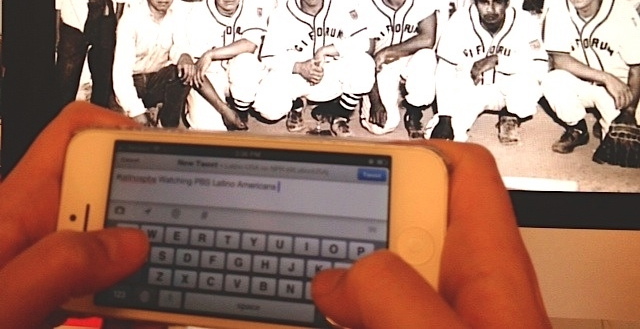
Latino USA social media producer Brenda Salinas steps away from Twitter and into the recording booth to talk to host Maria Hinojosa. They discuss how social media has reacted to the PBS series “Latino Americans.”