F12W: People Call Me Dosa Man

I am so honored to have participated in the New School’s Feet in 2 Worlds workshop in NYC this weekend. Check out the full story on Cowbird.

We had an assignment prompt: Tastes Like Home. This is what I produced.

“My name is Thiru Kumar, people call me the Dosa Man.”

“Jaffna Lunch, it’s number 6 on the menu, it’s like 4 little dosas, comes with the dry coconut everything, this is a special weekly lunch. It’s the only place you can get it here, my grandmother taught me how to make it, you can only buy it from my cart, nobody makes it.”

“I learned most of this stuff from my grandmother, and you have to put love into it when you cook, otherwise it won’t be tasty.”

“This is Masala Dosa, so this is the second time I’m coming over here because it tastes yummy and I’m from India, so this is our food, like this is South Asian food, It reminds me of my home place, my land, right, India.”

“Every day is a best day, when the weather is nice, sun is out, everyone’s here.”

An Ebola Vaccine May Come From An Austin Lab

xbiotech1-661wq4zmx1zc1sc4d1z3wg1zxy8gqa9uh3tuk4gebbu

I’m so proud to be a part of KERA’s one-hour news special “Surviving Ebola“.  Get the full story on KERA.


An Austin biotech company made headlines when it took blood from Dallas nurse Amber Vinson to develop an Ebola vaccine. It sounded simple, but XBiotech learned that creating a vaccine for a mysterious disease isn’t easy.

XBiotech specializes in isolating natural antibodies, which are blood proteins that fight foreign substances in the body. So when company president John Simard learned about the Ebola epidemic in West Africa, he had to do something.

Simard went there, but he ran into a major roadblock.

“I realized it was very difficult for us to operate there,” he says. “There’s not much infrastructure. In fact, I was very surprised at how little infrastructure there was. And I didn’t see that we actually as a company could work there.”

Simard says he came back defeated. But then there was an opportunity: Ebola was in Dallas.

“So now we had access to the blood potentially in our own neighborhood,” he says. “We had even greater urgency to bring the therapy out because it was in our own community.”

John Simard visited West Africa when he heard about the Ebola epidemic there. However, he soon realized there wasn’t enough infrastructure for his company, XBiotech, to operate there. Photo/XBiotech

xbiotech3-1024x683

A KEY INGREDIENT

One of the patients who gave blood to XBiotech was Amber Vinson, one of two nurses who contracted Ebola at Texas Health Presbyterian Hospital.

Early on, Vinson was vilified on social media for getting on a plane with an elevated temperature. It turned out that federal officials had approved her travel. She decided giving blood was a way to show her real character.

“All I do is care, all I want to do is help.”

Amber Vinson, quoted in a tearful People magazine interview

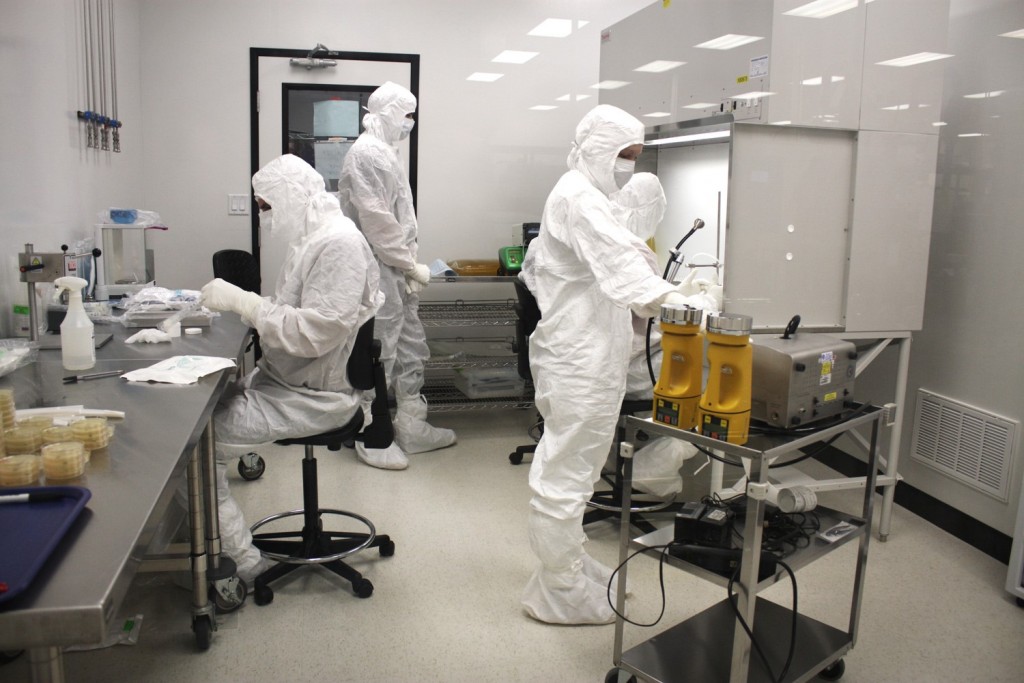
XBiotech drew some of her blood and isolated her antibodies in a 46,000 square-foot lab. A team of 40 scientists were able to quickly create a vaccine of Vinson’s antibodies. Then they handed their research over to the military. It’s now being tested.

xbiotech2

DEVELOPING A VACCINE

There are several vaccines in development that have been shown to prevent Ebola in animals. Now they have to be declared safe and effective for humans, which could take years.

Steve Bellan, a researcher at the University of Texas at Austin, designs clinical trials. He says it’s hard to conduct trials in the middle of the epidemic. West Africa’s infrastructure makes it hard for researchers to follow up with subjects.

There are also ethical concerns. In clinical trials, there are usually two or more groups. In this instance, one group might get the vaccine and the other may not.

A team of scientists isolated Amber Vinson’s antibodies from her blood. They used those antibodies to create a vaccine, which is now being tested. Photo/XBiotech

“Should we really be using a design where some people don’t get vaccinated when they’re at an extremely high risk of getting Ebola?” Bellan says.

Now that the spread of the disease has been mostly contained in West Africa, XBiotech is moving on. John Simard says the outbreak in Texas was an opportunity.

“It was an exercise for us to see if we can we turn this around, identify these infectious disease agents quickly and be prepared to make therapies,” he says. “It’s a little bit of a glimpse into our future of infectious disease.”

Simard says his lab passed the test, and that speedy response is a good sign for the next time an infectious disease comes down the road.

Farmers Turn To Drones For Field Operations

Drones Agriculture

Get the full story on Here & Now


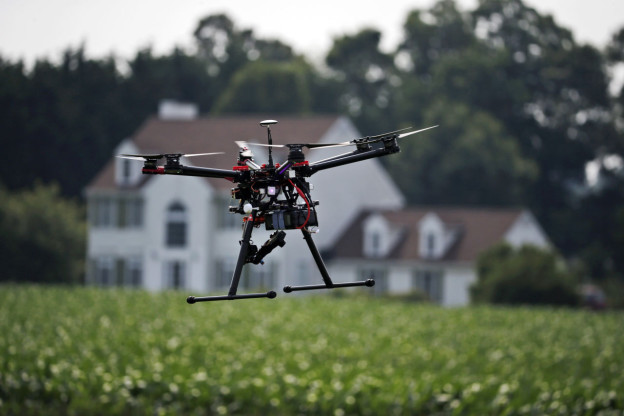
The Federal Aviation Administration recently came out with regulations about drones — aircrafts that can fly without a pilot on board.

The FAA says drones must be five miles away from an airport at all times and fly no higher than 400 feet. Those regulations are lenient enough that farmers and ranchers are starting to find ways to integrate this new technology into their work.


Essay: Doing Things That Make No Sense

zelda-1

Get the full story on Graceless 

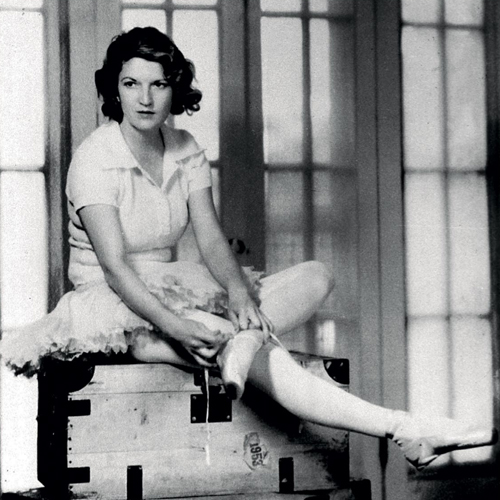
At the age of 27, Zelda Fitzgerald decided she wanted to become a professional dancer. Having studied ballet as a girl, she started taking classes for almost eight hours a day for three years. She wrote short stories to raise the $300 monthly tuition – over $4,000 in today’s dollars. She never asked her unsupportive husband for a dime because, as she said, “I wanted my dancing to belong to me.”

Although she apparently had a fair deal of talent, she never succeeded in becoming a prima ballerina, and neither will I. But i’m still going to take ballet 5 times a week.

Two months ago I had a job that I was really good at. When it first got there it felt like the perfect lily pad – I liked my coworkers, I believed in the work and I was making more money than ever. But as the months went by I realized the environment was toxic for me. I was pushing everything I cared about aside to become a work zombie, and every week I had to sacrifice more and more of myself to the job. After a particularly heinous day, I talked things out with my support system, gathered my modest savings, and handed in my resignation.

The moment I made the decision to quit I felt my personality coming back into my body. It felt like when blood rushes back into a limb after you slept on it weird.

There was no turning back, but I was terrified. Like serious stomach-cramping-levels-of-anxiety terrified. I knew that even though I had neglected them for months, my friends, family, and my boyfriend probably wouldn’t let me end up living on the street—my worst-case scenario. My decision to leave a full-time job as a journalist to make my own way as a freelancer was stupid by any metric, but it was still the right decision.

Now I hold up the checkout line at the grocery store every week because I’m validating online coupons. I spend the money I save on gourmet cheese. I know that makes no sense.

I imagine this “good” grownup taking inventory of the decisions I’ve made in the last couple of months and scowling. I shouldn’t have left my job; I should have sucked it up and toughed it out. Now that I quit, I should punish myself by living like a miser. I certainly shouldn’t be spending money on ballet lessons and cheese.

But I’ve decided that I don’t want to be a good grownup anymore. I want to be me – intensely, unapologetically me.

A really good therapist told me that deep down, you’re really the person you were at 5. You weren’t ecstatic all the time, you cried sometimes, but you were still a happy person. You didn’t care what other people thought of you. You hadn’t learned to “behave” yet. Sit pretty. Don’t get your dress dirty.

There should be a boot-camp to unlearn all the the years of proper lady training we’ve gone through. When we came out of the other side, I doubt we would actually start acting like kindergarteners. We probably wouldn’t spontaneously bust out into a one-woman talent show in public or run around with chocolate smeared all over our faces.

But maybe we’d sign up for that improv class. Or learn how to pole-dance. Maybe we’ d even stop dieting. We wouldn’t listen to anyone that made us feel ashamed for taking up space in the world.

There’s this part of my brain that gets all warm when I’m making decisions that are just for me, just like Zelda Fitzgerald. Decisions that aren’t strategic or have an end goal. I’m choosing to do this today because. I don’t even have to finish that declaration.

Happy women – now that is a dangerous idea. Happy women speak up when something feels wrong. Happy women don’t buy diet pills. Happy women boost each other up instead of tearing each other down. If we all made a snap decision to make ourselves happy as often as possible, the world would change in a second. It would never be the same.

For a long time I thought I would be happy when I finally shame-trained myself to be perfect – like a corset but for my life. At the end, I would be an award-winning journalist, the super cool friend, and the perfect girlfriend. I would weigh the perfect amount and dazzle everyone around me with how perfect I was.

I made sure to punish myself anytime I strayed from those expectations.

It’s taken me three years to begin letting go of those shackles. I slowly dissolved the self-discipline contract I had written for myself. And you know what? I don’t spend all day eating donuts and watching Netflix. I eat a (mostly) healthy diet and I go to dance class every day because I want to. I haven’t gained 100 pounds, my muscles haven’t atrophied. When I gave myself permission to do anything I wanted, I ate a spoonful of Nutella and then I was like “nah, I’m good.”

Deciding to be myself all the time didn’t instantly transform me into an asshole. My friends are still my friends. My boyfriend hasn’t broken up with me. I bet they probably like me better now that I’m not apologizing all the time and complaining about my job.

I really don’t have anything figured out yet, but in these last weeks I’ve discovered a secret that nobody tells women: Being happy isn’t hedonistic.

I’m learning to treat myself like a special, worthwhile person. Not because I’m perfect, but because I am a person. I’m not going to wait to please my inner critic to be happy. I’m just going to be happy.

It’s taking me a little while, but I’m figuring out that the best part of being a grown up is that I can do whatever I want whenever I want. I don’t have to justify it to anybody, even myself.

Why is lime flavor suddenly everywhere?

15288823502_233fe8140c_o

Get the full story on PRI’s The World

If you go to any grocery store in America today you will most likely find something — chips, soda, beer, or even condiments — that are “hint of lime” or “con limon.”

Now it’s cucumber-lime flavored Gatorade at the 7Eleven, even a whole section of supposedly Latino-themed beers — all with lime.

“Now you got not only the American companies coming in,” says comedian Adrian Villegas, standing in an Austin 7Eleven aisle, “but now you have Mexican companies with [fruit-flavored] Modelo Chelada. You’re already a Mexican beer and you’re trying to make it more Mexican.”

Fellow comedian Guillermo De Leon agreed.

“Five years ago I was in the store and I was looking for Mayonnaise and McCormick has mayonesa and it’s mayonnaise with a little bit of lime in it,” De Leon says, “and I thought that was interesting, it was the first time I’ve seen anything specifically targeted.”

After the success of mayonesa, American brands realized there was a whole market of Mexicans and Central Americans who were ready for a hint of lime on almost any food product. “It’s a very cultural thing… it’s ingrained in the traditions. It’s very common to see lime at the table,” says Korzeny.

And it’s a lucrative market: Last year Latino Americans spent $1.5 trillion on consumer products in the US.

But Latino Americans are not the only consumers of lime flavoring, the whole country has hopped on board. The owner of the Austin 7Eleven can barely keep his lime products in stock.

“I’m running low on that flavor, I’m waiting for my next shipment in, so the chips, the hybrid Doritios … Is it Latino kids buying them? No, it’s all kids.”

The App That’s Uber for Gasoline

2516437322_c1f34ef31d_zGet the full story on the Texas Standard

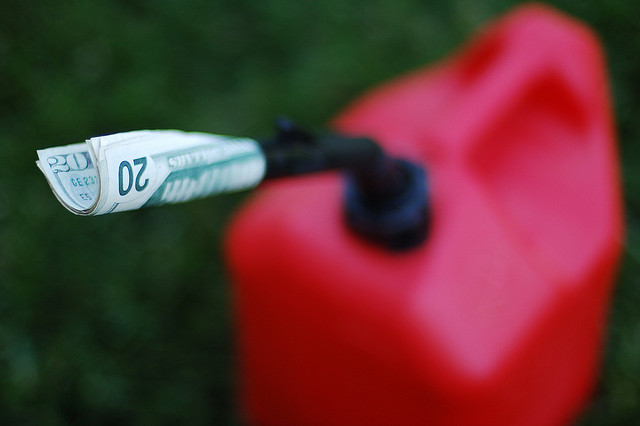
Lots of entrepreneurs see laziness as a business opportunity: There’s grocery delivery, dry cleaning delivery, fast food. Now you can add gasoline delivery to that list.

It’s like Uber for gasoline – except it’s perfectly legal. Serial entrepreneur Wisam Nahhas and his business partner wanted to start an app with a service component. He thought of the one thing he dreads every week.

“We sort of figured, ‘how about gas?’” Nahhas says. “We hate going to the gas station. Why can’t gas be delivered to you?”

So this month Nahhas launched FuelMe: it’s a fleet of three trucks with trailers full of gasoline. Drivers buy gas from a distributor every morning and go car-to-car filling up tanks.

“One of our goals is to be the world’s largest gas station,” Nahhas says .

It works like this: customers use the app to signal that they want gas, and leave their fuel cap open when they park. Nahhas or his employees get the alert and drive to the car. The FuelMe folks set up some safety cones and a mat to catch spills, then they unroll the hose and fill up the tank.

Nahhas says he knows exactly what you’re thinking.

“It doesn’t sound legal… That’s the first thought we said and then we quickly started researching, looking into it,” he says, “We were like, it doesn’t seem like it’s illegal – seems like if you can get the right permits for your tanks and the right licenses for your drivers it seems like it’s a doable thing. Sure enough it was.”

Nahas says getting gas delivered is no more dangerous than getting a fill up at a regular station. But can it be a good business?

Bernard Weinstein, an economist at the Cox School of Business at Southern Methodist University thinks maybe not.

“I think it’s unrealistic. I would expect the demand for the services of FuelMe to be fairly limited, so I don’t know it’s an interesting concept, but only time will tell if it’ll work,” Weinstein says.

Right now FuelMe charges customers a $5 delivery fee, plus the price of gas. Nahhas says he’s averaging 100 customers per week. The best customers? Women.

“Both men and women value their time but we have seen that women generally are probably less price-sensitive to this because…they hate the gas station,” Nahhas says.

Right now FuelMe is only available on the University of Houston campus. That’s the type of place the margins for this type of business make sense right now: places where thousands of cars are parked in the same area, like universities, airports and big tech campuses.

“When we structured the whole thing we envisioned it as an employee perk because at the end of the day it’s an employee perk that nobody else can offer,” Nahhas says. “We’re the only ones that offer this type of service, so if they’re interested in doing it we have a model to where they cover the five dollar delivery fee for employees and the employee just pays the gas price.”

Gas is what economists call a utility goo; there’s a limit to how much gas a city needs. That means if Nahhas succeeds in his dream of becoming the Citizen Kane of gas in Texas, some gas stations might go out of business. Historian Dwayne Johnson thinks that would be a real shame.

“There’s a lot of nostalgia about gas stations, about the gas companies,” Johnson says. “There’s still folks that have great loyalties to certain gas companies … and there’s a lot of interest in them. It’s probably going continue to stay that way,m because they are disappearing so rapidly.”

Jones says Texas is one of the few states where you can find a lot of really old gas stations, and they’re cultural landmarks. But at his mobile pumping station, Wisam Nahhas says he keeps filling up a lot of the same tanks week after week. Which leads him to think his customers – at least – aren’t all that nostalgic for the good old days.