Stressing It

Get the full story at Latino USA

a1MoisesVelasquezManoof_Wikimediacommons-470x260

Social scientists are still unraveling the connection between income and health. Why are poorer people generally sicker? Is it lack of access to healthcare of education? Could it be genetic?

Researchers have made a disturbing revelation: poverty creates a type of stress that can affect our biology..

Science writer Moises Velasquez-Manoff recently penned an op-ed in the New York Times on this subject. He joins Latino USA host Maria Hinojosa to talk about the relationship between poverty and stress.

Interview Highlights:

On the difference between stress and STRESS

“That’s the million-dollar question, but one of the main differences is whether you have some control over how you can react to the stressor. Let’s say your boss yells at you, there are ways you can deal with it, you can go take a run after work,  you can go complain about it with your family or friends, let off some steam. And all those things help you manage stress. And it seems that if you are poor you lack some of those ways of dealing with stress. Basically, in a sense, the whole world is yelling at you when you’re poor. We talk about this in terms of feeling, but what happens chronically is not just a feeling, actually, your stress hormones go up and your immune system changes in ways that change  the predisposition to heart disease, to various cancers, even to obesity and possibly dementia later in life. ”

On the long-term effects of poverty in children

“Scientists are finding they can still see the lingering mark of that early life stress decades later. They see it in how your genes express. Some people seem to be completely resilient, you can do whatever you want to them and they will still triumph, they will still rise. Other people are the opposite, they are very sensitive and a little bit of duress will destroy them. And some of appears to be genetic, but it’s the interaction of genes and environment that is important here.

On how toxic stress affects Latinos: 

“There is something called the Hispanic paradox. Where immigrants from Latin American countries seem to exempt from the rule of poverty correlating to poor health outcomes. But their children who are born in the United Sates follow the rule to the tee. Scientists have noted this for a few decades now and it’s been very puzzling, but also possibly revealing. One of the theories is…you still have some of the old coping mechanisms from the old country that help you cope with the negative consequences of being low-ranking and in some ways powerless in this country. In some ways living in an ethnic enclave, in el barrio, is healthy.”


Deported Vets

Get the full story at Latino USA.

C1-deported-vets_feature1-451x260

Thousands of immigrants take the naturalization oath of allegiance by signing up for Military service in exchange for a promise of citizenship.

But many immigrant veterans have seen that promise broken when they are threatened with deportation. They served in U.S. military as permanent legal residents with green cards. Then, in civilian life, they have committed crimes that have made them eligible for deportation.

Waiting to be released from detention

Norman Mcmaster is one of these veterans. He is currently being held in a detention center in Houston. He was born in Antigua and immigrated to the U.S. at the age of 14.

He dropped out of high school to join the military, served three years in the cavalry and was honorably discharged.

He says he was made to believe that joining the military automatically made him a citizen. This isn’t the case.

After the military, he was briefly incarcerated three times on charges of burglary and assault.

Six years after his last prison sentence, he thought he was done. He was on the straight and narrow. But then immigration officials showed up one day at his house.

Even though he’s been in detention for over a year, he remains optimistic and patriotic.

“This country has been good to me and my family, and everyone in my family is a U.S. citizen,” says Mcmaster.

The number of deported vets remains a mystery

No one knows just how many veterans the U.S. has deported. Immigration and customs officials say they don’t keep track, but immigration lawyers and groups formed to help the deportees say possibly thousands of vets have been deported since 1996.

That was the year Bill Clinton signed a law that took away discretion from immigration laws, changing the stakes for immigrant vets.

Craig Shagin is Mcmaster’s lawyer. “The consequence of an aggravated felony is that there is no judicial discretion,” says Shagin, “that means that a judge cannot look at your case and make the sort of decision that ordinary humans would consider making,.”

John Valadez is a director working on a movie about deported veterans. He met two U.S. veteran brothers, Valente and Manuel Valenzuela, who are currently in Colorado appealing their deportations.

They are facing exclusion from the United States for life.

There is one way to reverse deportation once it happens. You can come back into the U.S. after you die.

“Valente recently got a notice saying that there is a place for him in Arlington National Cemetery reserved for him because he was awarded the bronze star for national heroism,” says John Valadez, “so in death he is welcomed into this country as a hero, but in life, he is banished, never to set foot in this country again.”

Lawyer Craig Shagin advocates passionately for leniency for immigrant veterans.

“There are good citizens and there are bad citizens. The way we deal with infractions by citizens is we punish them,” says Shagin, “that’s also what we do to aliens, but for someone who has served in the United states army, particularly in a time of combat, to be then deported and stripped of his nationality seems to me utterly harsh and unreasonable.”

Meanwhile, the strangeness of this story continues. While deported veterans are still eligible for V.A. benefits, the countries they are deported to don’t have V.A. hospitals.


Remembering Latino WWII Vets

C2WW2VETS_MiguelMoradopicture_vocesprojectsCUT-470x260

Get the full story from Latino USA.

Latino USA explores the contributions Latinos made to the fight during World War II, and we learn about one soldier who captured around 1,500 prisoners of war. We speak with Prof. Maggie Rivas-Rodríguez, who has collected over 600 stories of Latino WWII vets.

Photo courtesy Voces Project

And check out the Voces Oral History Project’s piece on Latino WWII vets:

Foto-Voz: Ramon Galindo from Voces Oral History Project on Vimeo.

C2WW2VETS_headshot_MaggieRivasMaggie Rivas-Rodriguez is an Associate Professor of Journalism at the University of Texas at Austin. She has more than 17 years of daily news experience, mostly as a reporter for the Boston Globe, WFAA-TV in Dallas and the Dallas Morning News. Her research interests include the intersection of oral history and journalism, U.S. Latinos and the news media. Since 1999, Rivas-Rodriguez has spearheaded the U.S. Latino and Latina Oral History Project “Voces”.


Reporting on Schools

9078358262_d39c550c10_z-470x260

Get the full story from Latino USA.

NPR education correspondent Claudio Sanchez talks about how the situation of Latinos in education has changed throughout his career.

Photo courtesy Flickr

claudio sanchez
Photo courtesy National Public Radio.


Former elementary and middle school teacher Claudio Sanchez is an Education Correspondent for NPR. He focuses on the “three p’s” of education reform: politics, policy and pedagogy. Sanchez’s reports air regularly on NPR’s award-winning newsmagazinesMorning EditionAll Things Considered, and Weekend Edition.

School Stories

4903730479_e04576670a_z1-470x260

Get the full story from Latino USA.

Friends of Latino USA share special moments when being Latino affected their education. Their stories are funny, sad and unexpected. Featuring Representative Luis Rodriguez, Sara Inés Calderón, Gustavo Arellano, Irmary Reyes and Michele Carlo.

Photo courtesy Lel4nd

OC Weekly editor Gustavo Arellano tells his story about bullying other kids:


Oregon professor Irmary Reyes Santos tells her school story about being subject to a language proficiency test-in spite of being a U.S. citizen:

Journalist Sara Ines Calderon tells her school story about being uncomfortable around privilege and power:

Congressman Luis Gutierrez tells his school story about being ignored because of language barriers:

Author Michele Carlo tells her story about growing up and filling out:

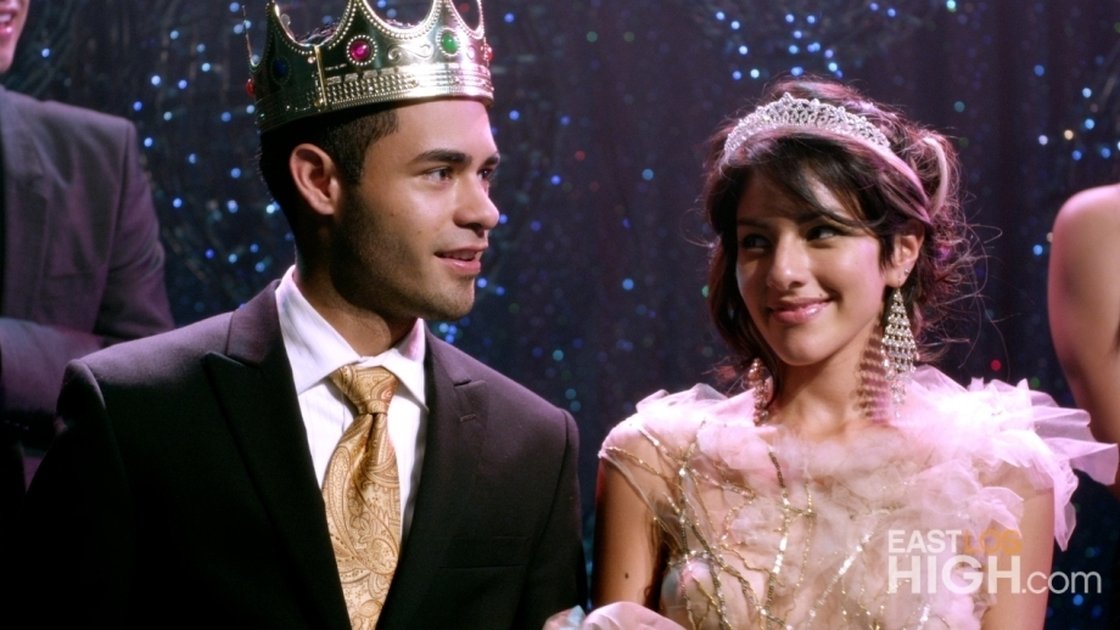
East Los High: Not Just Another Teen Soap

Get the full story at NPR

eastloshigh_wide-f46f536d9523cbc7365d43634d588f61fc7510a4-s40-c85

Despite the fact that it’s been generating a lot of buzz, Devious Maids is just not that interesting. Five Latina maids — is it a landmark for Latina actresses or another example of how the media stereotype Latinos? Either way, the relationship between hypersexualized domestic workers and their pretentious employers does not make for compelling television.

I was surprised to find that East Los High, a show that is garnering just a fraction of the attention, is actually much better.

The show — the first English-language series with an all-Latino cast, exclusively broadcast on Hulu — is set in a gritty East Los Angeles neighborhood where calling another womannaca (ghetto) is the ultimate insult. It features a fictional group of L.A. teenagers fighting for status and trying not to get burned.

Its creators, Carlos Portugal and Kathleen Bedoya, wanted to create a realistic depiction of teen pregnancy among Latinas. But despite its after-school-special roots, East Lost High feels surprisingly real.

With the exception of a few unnatural sex-ed dialogues between the teens and the adults who otherwise fail to supervise them, the series is compelling. It isn’t like anything else that’s on TV right now.

It feels more like the story you play in your head when your madrina tells you what she overheard at the nail salon — it is like eavesdropping on a richly imagined, but highly plausible life.

The show has all of the tropes of an addictive telenovela: love montages set to poppy music, evil plots straight out of Les Liasons Dangereuses, dying wishes, zingy one-liners and even a bad guy with a mustache scowling in the corner.

It also mashes up that telenovela feel with the aesthetics of the CW teen universe — cheating, drugs, hazing and sex tapes captured on mobile phones. Like Gossip Girl and Pretty Little Liars, the characters’ interaction with the digital world engages fans off-screen.

But despite its soapy style, the series stays grounded in reality. It’s part Latino Degrassi, yes, but it’s also part social commentary — in this world, mistakes have serious consequences.

The show follows Jessie, a geeky teenager living in a single-parent household, as she tries out for the school’s bad-girl dance team. Suddenly her crush and her dreams of popularity seem within reach, but to get there she’ll have to break away from her critical best friend and troubled cousin.

Through it all, she’ll have to undergo constant torment at the hands of Vanessa — a villain who could make Brenda Walsh cry. Example — when her former best friend gets pregnant, Vanessa snarks, “I hope you have twins [#ThingsYouDontSayToAPregnantTeen].”

For the girls of East Los High, the stakes are particularly high. Social status is directly tied to the desirability of the guy you are dating, so being sexually active has serious social capital.

But if you get pregnant, it’s game over. You’ll become just like your mama sufrida — a high school dropout working multiple cleaning jobs just to pay the bills.

Like a telenovela, each episode reveals more layers. The characters are complex and their development veers in unpredictable directions.

Portugal says he had three rules for the writers of East Los High: no gardeners, no gang members and no maids.

“My hope is that people from East L.A. get to see themselves in the show portrayed as diverse human beings and not the typical Latino stereotypes we see in TV and films,” says Portugal.

Right now, East Los High is the sixth-most-watched show on Hulu. The streaming service has had content from Spanish-language TV networks on its Hulu Latino page since 2011. Now it is looking to attract even more Latinos with English-language content.

It’s a refreshing depiction: In the universe of East Los High, Latinos are vixens and dropouts, but they’re also dancers, doctors, counselors and citizen journalists.

So the next time someone cites Devious Maids as the Latino show of the moment, give East Los High a shoutout. I’ll certainly be watching.

Friends Of The American Latino Museum Hold First Town Hall In Houston

Get the full story at KUHF

Latino-museum-pics640px


There are currently 12 museums on the National Mall and one more under construction. The National Museum of African American History and Culture is scheduled to open in 2015. A group of activists is now urging the Smithsonian to build another ethnic museum, this one to celebrate Latino contributions to the U.S.

The idea for a National Latino museum was borne in 1990 when a task force reported the Smithsonian was largely ignoring Latinos in its exhibits. At the time, out of the 470 “notable Americans” in the National Portrait Gallery, only 2 were Latino.

Since then, the Smithsonian designated an internal office devoted to including Latino stories within the existing framework.

But The Friends of The American Latino Museum say that’s not enough. Estuardo Rodriguez represents the group.

“The truth is there’s so much more out there that simply isn’t being told and instead of pointing fingers, we simply suggest that it’s time for a national museum on the National Mall to fill those gaps.”

Congress is currently reviewing a bill to designate a vacant Smithsonian building as the future home of the American Latino Museum.

Critics of the project say the Smithsonian should stop building specialty museums and should instead concentrate on improving the ones it already has. New museums are expensive, and some argue that ethnic museums promote cultural isolationism.

Maggie Rivas-Rodriguez is a journalism professor at the University of Texas Austin. She says the American Latino Museum isn’t about segregation, it’s about education.

“As long as there’s that lack of awareness, people aren’t going to understand that we’re not all immigrants. We’ve made a lot of contributions to our country, our communities, to our states. And there’s still this sense among people that we’re outsiders; we’re not outsiders.”

Rivas-Rodriguez hopes the museum’s creation will prompt the inclusion Latino-American History in schools all over the country, which she says is sorely lacking. She wants the museum to be a national meeting place, and a symbol of the experiences of the more than 50 million Latinos living in the U.S.

Furry Friends Help Rice Students De-Stress During Finals

Get the full story at KUHF


This slideshow requires JavaScript.

Something unusual is happening at Rice University. Students in the library are closing their laptops, putting away their textbooks and dropping to the floor.

“Scarlett! Come see all these people that want to see you!”

A dozen dogs of all shapes and sizes, plus a few cats, are enjoying belly rubs in the middle of a reference room.

“Bring up sound of shaking dog.”

Rice is among a growing number of colleges bringing therapy dogs to students during finals week. The idea is that playing with a pet can decrease feelings of anxiety.

Agnes Ho is a Counselor at Rice.  She says it might seem silly, but bringing pets into the library really works.

“This is really helpful, as you can tell the students feel really excited when they see dogs coming in and they can take a break and they can step out of that very stressful moment like take a deep breath.”

She says Rice organizes this and other events like catered study breaks and midnight breakfasts to remind students that they’re not alone. 

On the floor between two shelves, Senior Sam Newman is snuggling a Great Dane and a Chihuahua at the same time. He acknowledges that stress can be a real problem.

“Freshman fall was probably my hardest semester, actually, I was taking multivariable calculus and I hadn’t taken math n a few years, and it was kind of like a punch in the gut, but since then it’s been more smooth sailing, I guess.”

Since then he’s picked up some tricks to manage his time better. He has some advice for underclassmen.

“Keep your wits about you. Make a list of all the things you have to do and try to get things done one at a time.”

Rice first invited therapy dogs to campus last December, and they were such a huge hit with students that they decided to do it again.

Houston Students Celebrate Latino Culture Through Mariachi Music

Get the full story at KUHF

This slideshow requires JavaScript.


It’s an ordinary morning at Patrick Henry Middle School in Northeast Houston. 

Jose: “Good morning. Start up. Warm up.”

Thirty students are scrambling into a music room, greeting their teacher, picking up their instruments and practicing their music.

But not just any music …

[music: “LOS PATRIOTAS DE HOUSTON TEJAS”]

Mariachi is a type of Mexican folk music. It’s played at celebrations like weddings and quinceañeras. Musicians wear elaborate suits called traje de charro.

They play violins, trumpets and different sized guitars. The music is about love, pain and betrayal.

[music: “LOS PATRIOTAS DE HOUSTON TEJAS”]

That’s Giana Mijares, the group’s lead vocalist.

She’s 12 years old. She enrolled in this school specifically for the Mariachi program.

“It taught me so well by learning different instruments, its history, and how our culture, or Mexican culture really represents that music. And it’s very good to actually be a part of it and just be proud of it and representing the Mariachi music too.”

Giana credits her dad for her love of Mariachi music. When he heard her singing ballads by the Tejana idol Selena, he put her in vocal lessons with Jose Longoria, the director of the Mariachi program at Patrick Henry.

Longoria recruited her for his program and now she’s one of his 60 students.

The program started almost by accident. 12 years ago, Longoria was working as a math teacher, performing music with his brothers on the side. They were entertaining the crowd at a school luncheon when the school’s superintendent approached him. He said, “Let’s start a Mariachi program.”

Longoria was in. But he knew if the program was going to work, it’d have to be serious. Now his students are more than a band, they’re a team. And he’s as strict as any coach: the kids have to pass all their classes to perform. 

“The responsibility to make sure that they come, that they participate in fund raisers, all that goes back to them. So those are skill building that they’re going to need in the real world for when they have a job. They have to be participating; they have to do their best.”

Some of the kids want careers in music. Others are happy just to learn. Either way, Longoria says the best part of the program is that it helps them be proud of their culture, their families. And based on how many people show up to their performances, he says their families are proud of them too.

US Rep. Sheila Jackson Lee Sits With Students To Discuss Gun Violence

Get the full KUHF story.

Elementary school students in the 3rd Ward crowded into a gymnasium to participate in a lecture by a guest speaker.

“Is this the type of gun that you should have?”

” NO!”

” Should you be on the street with this type of gun?”

” NO!”

That’s Congresswoman Sheila Jackson Lee. She says she’ll use her influence in the house to push against the threatened filibuster in the Senate.

She wants schools to be secured by armed guards, not by teachers with guns.

“I think there are Houstonians who believe in this and I think there are Americans who believe in this, and Congress must be guided by America’s wishes and desires, we are the representatives of the people.”

Sean Holcomb is a teacher at Koinonia Community Learning Academy. He says talking about guns in school is important. His young students are already familiar with gun violence.

“Their families usually carry guns or they wake up to sometimes to policemen sometimes raiding their houses looking for those types of weapons, so they’re actually very knowledgeable about guns. They know about them. They know what to do with them and they know what they can and cannot do.”

Holcomb says that youth violence in an epidemic larger than laws, but still commends legislators’ efforts to do something about it. The Senate will cast its first vote on President Obama’s gun-control proposals on Thursday.