Press: “Demand For New Media Experts In Women Of Color

latinitas

I’m pleased to have been featured in an article by Gabriella Landeros for Latinitas.

Some excerpts:

“The evolution of how we communicate with people has passed all boundaries. From e-mail and social media, to online advertising. Today, people are taking in information in more creative and tech-friendly ways, especially the younger generation. The new media industry is growing, and in more dynamic ways than ever before. With this growth, many women of color are joining the new media force.”

“Social media and advertising provide an outlet to voice opinions at a much larger scale than one can do alone to a group of people. It also serves as a tool to connect with like-minded people who share your same interests. Brenda Salinas, Associate Producer for NPR Latino USA, stated, ‘Latinos use social media in more way than any other ethnic group. Social media helps communicate with family in other parts of the world. There is also a different relationship with people on Twitter vs. real life. Many of us are so used to being the only one in the room, and we don’t have that feeling on social media.’

“It’s revolutionary that the second I’m interested in something, I can get the information in seconds – 20 years ago, we couldn’t do that! You can instantly connect with people that have your same interests, without feeling alone. The fact that other people are like me, is very comfortable. You can connect with people who have shared your same cultural experiences,’ continued Salinas.”

“’There is no such thing as a radio producer, you’re a multimedia producer.  If it airs once, you are wasting your time and only reaching a fraction of people you can be reaching.  To do social media well, you have to be ahead of the curve and do it right. Elements of storytelling don’t change, but social media always changes. It’s always on the go and a learning process,’ stated Salinas.”

My Multilingual Personalities

152200_7012434093_97fe5bf54d_o-e1400178713438-1

Get the full story at Latino USA.

Some linguists hypothesize that multilingual people can have different personalities depending on the language that they are speaking. Latino USA producers Camilo Vargas and Brenda Salinas discuss how growing up bilingual alters their personalities. Camilo learned English at a bilingual school in his native Colombia. His consumption of American media affected the personality he takes on when speaking English. Brenda Salinas immigrated to the U.S. from Mexico at the age of 6. Growing up in Texas, having light skin meant that she could pass as white, as long as she spoke English.


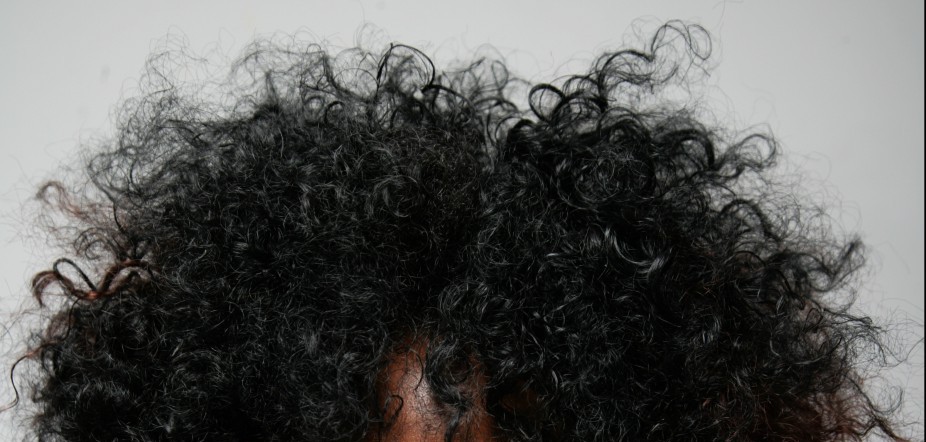
Afro-Latinas and “Good” Hair

Wild_hair-e1400173420573-3

Get the full story at Latino USA.


In the 1960’s, natural black hair became a revolutionary political statement in the U.S. Wearing an afro was a physical expression of black pride and beauty. It was polarizing, but exciting. Who could forget Pam Grier’s sexy afro?


But relaxers, straighteners and weaves are still a 9 billion dollar industry in this country. In 2009, comedian Chris Rock directed a documentary called “Good Hair.”


In 2012, Olympic Gymnast Gabby Douglas was criticized for her kinky ponytail. Here she is talking to Oprah:


But in the Afro-Latino community, there really haven’t been that many cultural icons sporting natural hair. That’s were Carolina Contreras comes in. She created the blog Miss Rizos to connect with other Afro-Latinas who wanted to give their natural hair a try.


PART OF MY HYGIENE

Growing up in the Dominican Republic, Contreras started getting her naturally curly hair relaxed every 2 months at the age of 7. She says her family saw the painful process as an important part of their personal hygiene. “I have 3 sisters and I learned how to relax hair,” says Contreras, “I inflicted so much pain on them and I feel like it’s something that I’m still healing from.”

Her kinky hair required a lot of attention, but Contreras says what really led her to relax it was a feeling that her curls weren’t presentable. “If you work for a bank in the Dominican Republic, you’re most likely going to get a weekly stipend to go to the salon,” says Contreras,” they just feel like it’s not professional.”

She says that message trickles all the way down to little girls. “It’s frustrating to have to deal with that today,” says Contreras, “our hair has nothing to do with our productivity, our intelligence or with our knowledge about a particular subject or anything.”

LETTING MY ANCESTORS FREE

Raquel Cepeda is a journalist and author. She says in the Afro-Latina community, natural hair is still a political statement. “As soon as they see the curly hair the say oh she’s a leftist, she’s this, she’s that,” says Cepeda, “to me it’s a badge of honor, to me it’s how I honor my ancestors by letting them live freely in my scalp and in my hair.”

Cepeda says she feels free to wear her hair curly because she knows what it really means. “We really have to un-educate and re-educate ourselves and learn about our histories,” says Cepeda, “When you learn about your history you learn to start being proud of where you come from, and then the curly hair won’t be a thing.”

HAIR IS JUST HAIR

And once everybody understands their heritage, hair can just be hair.

Carolina Contreras says she’s inspired her mom and her sisters to stop relaxing their hair. Every time she goes back to the Dominican Republic she feels more hopeful. “I just get really excited because I see more women in the street wearing natural hair, I start seeing more ads on Tv and everywhere,” says Contreras, “I think we’re definitely headed in the right direction now.”

STAYING TRUE

Beauty can hurt, sure. But grooming and priming is a form of personal expression. It can bee freeing, once you do it because you want to and not because you feel you have to.

Photo courtesy of Flickr user Peter Klashorst.

Why Are We Failing Our Black And Latino Students?

146607538-e1399575773988

Get the full story at Latino USA.

Black and Latino kids perform significantly less well in school than their white counterparts. The factors for this so-called achievement gap are well documented: failing schools, crime-ridden neighborhoods, unequal resources and limited social capital. But despite this research, some advocates say American schools are perpetuating traditional patterns of poverty and inequality. Latino USA guest host Claudio Sanchez talks to researchers Claudia Galindo and Pedro Noguera about community involvement, cultural misunderstandings, and how stereotypes hold children back.

Alex Wong/Getty Images

Latinos: The Cosmic Race

90533946-e1398370834168Get the full story at Latino USA.

A Mexican philosopher named José Vasconcelos believed one day, a new race of people would be born out of the Americas. His 1925 essay was called “La Raza Cósmica”. Because Latin Americans are Mestizos – a mix of European, African and Asian ancestry, he believed they actually transcend all other races.

Author Marie Arana spoke about Vasconcelos at the Library of Congress.

“He believed that the experiment that was being conducted in Latin America, of mixing of races, was an important venture,” says Arana. Vasconcelos looked to the leaders of Latin American independence for inspiration, “In an instance of historical crisis they formulated the transcedental mission assigned to our region of the globe, the mission of fusing people ethnically and spiritually,” says Arana.

Vasconcelos believed one day La Raza Cósmica would erect a new civilization, Universópolis, where traditional ideas of race and nationality would be transcended in the name of humanity’s common destiny.

The National Council of La Raza takes its name from this idea.


Senator Barrack Obama commented on La Razá Cósmica in a speech to the NCLR in  2008. “That’s big, a term big enough to embrace the rich tapestry of cultures and colors and faith that make up the Hispanic community, “ says Obama in the 2008 speech, “big enough to embrace the notion that we are all a part of a greater community, that we have a stake in each other, that I am my brother’s keeper, I am my sister’s keeper, we rise and fall as one people.”

That was before his election, and before his administration deported 2 million people. But if you examine the demographics, the cosmic race seems to be emerging. President Obama himself is biracial, and according the the U.S. census, half of all Americans under 5 are Black, Latino or Asian.

It looks like La Raza Cósmica has indeed arrived.

(Photo by NASA, ESA, and the Hubble SM4 ERO Team via Getty Images)

Latinos In Space!

152919024-e1398371223710

Get the full story at Latino USA.

Ellen Ochoa was 34 years old when she served in her space mission aboard the shuttle discovery in 1993.


Dr. Ochoa went on three more missions and even played her flute in space.


She told NPR’s Michel Martin that she didn’t really think about herself as the first Latina astronaut until she started receiving thousands of letters from excited Latinos all across the country. “After I was selected I realized that there was a whole dimension that I hadn’t thought about,” says Ochoa, “that was the opportunity to talk about exploration and science and engineering and education to a whole group.”

NASA Astronaut Ellen Ochoa

In 2013, Dr. Ochoa became the first Hispanic and second female director of Nasa’s Johnson Space Center.

 UP IN SPACE…

José Hernandez grew up working in the fields alongside his migrant farmworker parents. Then in 1972, he saw something that would change his life.

He told NPR that he remembers watching the moon landing on TV. “I remember I would sit there and I would go outside and look at the moon, come back in, watch Gene Cernan walking on the moon, go back out, and I was just amazed that we had humans up on the moon a quarter of a million miles away,” says Hernandez.

Hernandez applied to be an astronaut 12 times before getting chosen in 2009. “You go up there and you taste it once, and you want to go back, absolutely,” Hernandez told NPR, “there’s no doubt in my mind, day after I got back I wanted to go back, it’s almost addicting.”

Hernandez didn’t get to go back. That same year, President Obama delivered a budget to congress calling for the end of the shuttle program. Hernandez decided to leave NASA to spend time with his 5 children.

Mexican astronaut Jose Hernandez waves t

“When you train for a shuttle launch, 95 percent of the training is here at Johnson Space Center, so you come home every day,” he told NPR, “The international Space Station, it’s more like a two-and-a-half year training flow, and 80 percent of those two-and-a-half years you’re training abroad.”

Even though the shuttle program is suspended, astronauts continue to inspire us.

…AND ON THE GROUND

It’s not just the astronauts who paved the way for people of color. On the ground, Latinos built equipment, programmed computers and created software to make sure those shuttles took off. Candy Torres was one of those pioneers.

Candy1

A self-described “Technorican”, Torres has worked on satellites, the Space Shuttle and the International Space Station.

Torres was born in the Bronx to Puerto Rican parents in 1954. Growing up, she was inspired by the vision of the future depicted in Star Trek. “It was stunning to me to see this diversity out there and exploring and really working towards a better future,” says Torres, “this is a positive vision of the future, this is what we need to work towards. “

 KNOWING WHAT YOU WANT

When she was 14, Torres joined the Civil Air Patrol and learned to fly a plane before she could drive a car. She studied astrophysics at Rutgers, worked on satellite research and developed software for the shuttle program.

“When you’re first starting out you really have to know what you want and it’s not necessarily other people that are going to keep you from doing what you’re going to do, it’s yourself,” says Torres.

Candy2

Torres now focuses on encouraging Latinos and Latinas to pursue careers in science and engineering. “You can do it, it’s exciting, its fun,” she Torres, “its understanding the universe and its being connected to the universe and making the world a better place.”

(Photos by NASA via Getty Images/ Courtesy of Candy Torres. )

Jorge Narvaez: Youtube Star Turned Activist

Familia-e1397159776202

Get the full story at Latino USA

One in four Latinos say they personally know someone who has been detained or deported by the federal government in the past year. For Jorge Narvaez, that someone is his mom, who is currently being detained in Arizona. Jorge became Youtube famous when he uploaded a video of him and his 6 year old daughter, Alexa, singing “Home” by Edward Sharpe and the Magnetic Zeroes.”

Since then, they’ve been on the Ellen Degeneres Show, America’s Got Talent and have starred in a Hyundai commercial.

Jorge is using his social media platform to bring attention to his mom’s case, and to talk about the hundreds of thousands of mothers being held in immigration detention, most who have committed minor crimes or no crimes at all.

Photo courtesy of Jorge Narvaez


Happy White History Month!

Mount_Rushmore_National_Memorial-e1396304920826

Consider this my audition for the Daily Show.

For our April Fool’s edition, I wondered, “What if I wrote a piece about white people the way most mainstream outlets write about us? What if whiteness was something you had to overcome to succeed? What would that sound like?”

This is what I came up with:


“They’re 80 percent of congress, 86 percent of Fortune 500 CEOS, 94 percent of Oscar voters and 93 percent of Oscar winners. They invented lightbulbs, airplanes, fake butter and the internet. They founded institutions of higher learning all over the country. They ended slavery.

Despite all of these achievements, the Non-Hispanic white population is shrinking every year. But just who are white people? Latino USA producer Brenda Salinas went to Times Square to find out more about the history of these proud people.”

April Fool’s: Immigration Reform Really Happened!


165851499-e1396304799932Get the full story at Latino USA

Do you ever have dreams about work? Maria Hinojosa had a dream that immigration reform passed the House of Representatives. There were celebratory marches all over the country. People were jumping up and down, crying with their loved ones. The economy was booming and immigrants no longer lived in fear. But then she woke up.


Breastfeeding While Latina

89429968-e1395339620956Get the full story at Latino USA.


Latinas lead the pack when it comes to breastfeeding their babies at birth – more than 80 percent of Latina moms do. More Latinas nurse their children at 12 months than any other ethnic group in the country. But there are still a lot of misconceptions about breastfeeding, and a lot of pressure to get it “right” – whatever that means.

“NOT ENOUGH”

Yuliana Delgado really felt this pressure. She had read all of the parenting books, but one thing wasn’t according to plan. “I was pumping every 2 – 3 hours, I would get up through the night and pump,” says Delgado, “I was drinking maltas like you wouldn’t believe to try to increase the production and nothing was working.

After struggling for 2 months, she made a decision. “I realized I had to start supplementing not only for my baby’s sake, but I was wreck,” says Delgado.

“WAY TOO LONG”

Luisa Colón was dealing with a completely different breastfeeding problem. She lived in a large Puerto Rican community in Brooklyn. She says the Latinas around her were shocked that she was still nursing her 20 month old. “It was this moment of “you’re still breastfeeding?” says Colón, “I think the expectation was that that’s what you do early on, you supplement with formula, you move on to formula, the breastfeeding gets left behind.”

Colón felt like she had to defend her personal choice to strangers. “I was constantly being told that my baby wasn’t chubby enough, he’s so small, oh how old did you say he was and how much does he weigh?” says Colón, “I must have had to answer that a dozen times.”

MISCONCEPTIONS ALL AROUND

Sharen Medrano is a local lactation consultant, and she says she hears this a lot. “Some of this stems from the misconceptions,” says Medrano, “some of it stems from some in the Latino community thinking that babies have to be chunky and chubby to be healthy when in fact most breastfed babies tend to be on the leaner end.”

THE MOMMMY WARS

The argument about how much to breastfeed really takes off online. “There’s so much judgement out there,” says Delgado, “I felt like that’s great that moms are able to breastfeed and that the support is out there, but once I decided to do formula, I felt like there wasn’t that much support out there.”

And on the other side of the breastfeeding spectrum, Luia Colón also felt a lack of support. “I was used to being a Latina who got a lot of support from fellow Latinas just being out in public, and suddenly it wasn’t there,” says Colón.

A SAFETY NET

A strong support network at home is crucial, “I was really fortunate that we went home to a supportive environment, my partner and my family,” says Colón.

Yuliana Delgado eventually found a way to be at peace with her choice.

“My mom was the provider of the maltas, so I did get some pressure from her, but she understood after she saw what a wreck I was that it was just not going to be possible for me to do it,” says Delgado.

There’s so many factors to consider to deciding whether you want to breastfeed and for how long.

“In the end it’s your baby, and you know what’s right and you know what feels right and what you want to do,” says Medrano.

IGNORE THE HATERS

As in so many health decisions, when it comes to breastfeeding, ignore the haters. Feel free to make your own choices, but know what you’re getting into.

After all, breastfeeding is just the start of the mommy wars.