Do North Texans Need Earthquake Insurance?

Irving

Get the full story at the Texas Standard.

While the Dallas and Irving city councils are busy assembling an earthquake task force, residents are trying to figure out how to best protect themselves and their assets from any future damage.

Irving, Texas has had a shaky start to 2015. There have been 23 earthquakes there since January first which have also been felt in nearby Dallas.

The cities of Dallas and Irving are trying to cope with the recent seismographic activity by assembling an earthquake task force. Meanwhile, SMU scientists have deployed close to 2 dozen seismographs around the Irving area to better understand the quakes.

“Do I Need Earthquake Insurance?”

While city hall and the academy take protective measures, North Texans are wondering if they need to protect their assets from any future assets.

Ashely Hunter is the president of HM Risk Group in Austin. She says she has been fielding calls from concerned North Texans all week, “I think it’s just everyone is looking for piece of mind, the question is ‘Should I get it? Is the likelihood that my house is about to fall into this imaginary crater in North Texas?'”

The biggest quake this month has registered 3.6 on the Richter scale. That’s enough to knock stuff off shelves and break a few windows. But the threshold for serious damage is generally around 5.0. That’s almost 100 times more powerful.

Measuring The Risks

Dallas Building Code administrator David Session says the likelihood of that happening in North Texas is pretty low.

“The Richter scale is more of a measure of the intensity of the event itself,” Session says, “The building code is actually dealing with the horizontal ground motion, which is where the major damage comes from as far as the building is concerned.”

Session says that in the Dallas area the horizontal motion is so minimal that the code doesn’t trigger any major requirements as it would in California.

But in California just less than 20 percent of homeowners carry earthquake insurance. Even though the state is hit by 2 to 3 major quakes every year.

In Oklahoma, a state where manmade earthquakes are more common, the state commissioner recommended that all property owners add earthquake insurance to their policies.

But topography and building codes differ in every state, which makes state-to-state comparisons difficult.

Ashley Hunter says insurance professionals in Texas are waiting for the result of the SMU study. If the earthquakes in North Texas are man-made and are predicted to become more intense, that might increase the demand for earthquake insurance.

Weighing The Costs

In Texas, getting insured against earthquakes would set you back between 5 and 6 thousand dollars a year – that’s 5 times the average premium for homeowners insurance.

Which is why Ashley Hunter says it’s just not worth it.

“As an insurance professional, if you want the insurance of course I would actually sell it to you just to give you piece of mind,” Hunter says, “but as a consumer, I would never purchase it from my own insurance agent.”

Hunter says property owners would do better to put that money away to use during any type of emergency: medical, natural or financial.

PRESS: Texas Standard To Launch Jan 9th.

2015 is going to be a big year for Texas public radio and for me professionally.

I’m proud to be a part of the team bringing Texans the news they care about, no matter where it’s happening.

texstandard

Want to know more? Read the Columbia Journalism Review article about what we’re planning to do and follow us @TexasStandard.

And tune in to your local Texas radio station at 10 am on Fridays. We’ll see you there!

Is The Ugly Christmas Sweater Bubble About To Burst?

1-3126364764_24d29b348d_o

Get the full story at KUT.org

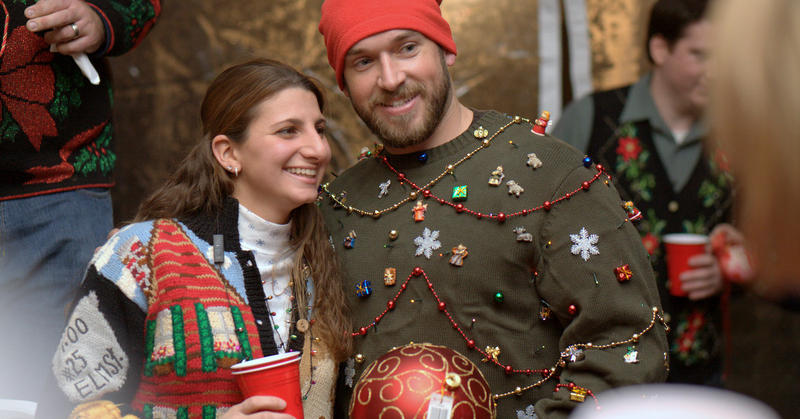
There’s a good chance that you’ll be invited to an “Ugly Sweater” Christmas party this year. If you didn’t save yours from the ’80s, there’s pop-up stores all over Texas meeting the demand.

But is the ugly bubble about to burst?

Today is the third annual National Ugly Christmas Sweater Day. The garish garments have been around since the 1950s, when they were originally considered (unironically) beautiful. Chevy Case help lead the kitschy sweater comeback in the ’80s in National Lampoon’s Christmas Vacation.

Now the trend is making a comeback. According to the “Ugly Christmas Sweater Party Book: The Definite Guide To Getting Your Ugly On,” ugly sweater parties may have originated in Vancouver in 2001. Catching on social media, the tradition snowballed from there.

Now Visa and the U.S. Post Office are using ugly sweaters in their holiday marketing campaigns; Jimmy Fallon is doing the “12 Ugly Sweaters of Christmas” as a segment

on his late-night talk show.

Jeremy Turner owns the Ugly Christmas Sweater Shop in Dallas. It’s the fourth year Turner has sold vintage holiday sweaters. “I think our shop will sell about 8,000 sweaters this year,” he says. “It’s crazy.”

Turner isn’t the only entrepreneur cashing in on ugly sweaters. Forever Collectibles, the company licensed to make the official ugly sweaters for the NFL and NBA, is projecting sweater sales of $10 million.

Though ugly Christmas sweaters are the hot holiday trend of 2014, some think their novelty is going to wear out. “Invariably these trends of trends will reach some sort of peak or culmination,” says Ben Bentzin, a marketing professor with the McCombs School of Business at UT-Austin. “Invariably they’ll collapse, because they have no substance underneath them,” he says.

Bentzin adds that when you put your money behind a trend, you have to know when to get out. As far as ugly Christmas sweaters go, that time might be now.

While Turner is selling more ugly sweaters than ever in his Dallas store, his profit margins are shrinking. He used to be able to buy a sweater for a couple of dollars at a thrift store and resell it for as much as $30. Now he struggles to find them for less than $20.

Speculation in the vintage market makes it cheaper to get a brand new ugly Christmas sweater from retailers like Forever 21 or Party City. But Turner says if you go for convenience, you’re missing out on a one-of-a-kind treasure.

“I think their sweaters are lame, they’re not funny at all,” he says. “They’re not even good at making bad designs.”

There’s also the environmental aspect to consider.

Elizabeth Cline is the author of “Overdressed: The Shockingly High Price of High Fashion.” She says when the trend dies, the sweaters will live forever in a landfill. “A lot of them are made out of synthetic materials and synthetics don’t biodegrade,” Cline says. Clothing cast-offs also make their way overseas, but Cline says “last time

I checked there’s not a big market for Christmas sweaters in Africa.”

That’s why Turner is considering a buyback program to make sure the sweaters don’t go to waste.

Even if the trend is on its last legs, Turner might want to hold on to his sweater stash – Bentzin says trends reenter the zeitgeist every 20 years or so.

As for this round, Bentzin thinks there’s one telltale sign that the bubble is about to burst. When the attention in traditional media and social media reaches a fever pitch, it’s usually a clue that we’re going to see a downturn – so by reading this story, you might be complicit in killing the ugly Christmas sweater trend.

Is America Ready To Fall In Love With The Telenovela?

jav102b_0168b-7745d93e091adddc821215a6b3eaf55d2afb10d4-s600-c85

Get the full story at NPR

Most reviews of the CW’s Jane The Virgin mention that it was loosely adapted from a Venezuelan telenovela calledJuana La Virgen. Then they predictably misrepresent atelenovela as a Latin American soap opera.

True, telenovelas and soap operas are daily shows targeted toward child-bearing women. They also tend to rely on amnesia and other questionable plots. But their formats and their roles in popular culture are completely different. To understand why Jane The Virgin feels so refreshing, you have to understand why telenovelas are unlike anything else on American TV.

Don’t Call It A Soap Opera

To start, telenovelas are miniseries. Writers always have an ending in sight, and that ending is almost entirely predictable. The viewer’s delight lies in watching the clueless characters’ twists and turns before arriving at their predetermined fate. If a telenovelais getting particularly good ratings, writers will add a few dozen episodes to prolong the series’ eventual ending, which is usually an over-the-top wedding between the two leads. In contrast, Days of Our Lives has been on the air since 1965 and nobody knows what it’s actually about.

The other big difference is airtime. Though daytime telenovelas exist, the big TV networks run their marquee telenovelas on prime time, finishing just early enough that your mamá can monopolize the phone dissecting them with her friends. Some countries have even exploited the cultural obsession to address public health topicslike domestic violence.

Lastly, telenovelas are much more popular than soap operas. Long-running soaps likeGuiding Light are getting canceled and Disney’s SOAPNet channel is no more. Nielsen estimates there are 2.9 million soap opera viewers, while more than 5.6 million peopletune in to their nightly telenovela — and that’s just in the U.S.

Are You A Ranchera Or Poor-Girl-Meets-Rich-Man?

To truly understand the spirit of telenovelas you have to understand the two types: the first being the ranchera. The ranchera takes place on a large hacienda, and its pretty ingenue is usually a rich orphan. There are beautiful horses, a farmhand with cut abs and a Vincente Fernandez song in the opening credits. This is why Latinos love Dallas.

The second type of telenovela is the working-class-girl-meets-a-rich-man story. In this case the winsome protagonist is pretty, but not too pretty, and the rich guy falls for her first. In fact, she’s not even interested in him for his money; she’s just a good-natured girl looking for true love. Think J-Lo in Maid In Manhattan, which is probably running on TBS right now.

Jane The Virgin falls squarely in the second category. Though Jane doesn’t actually meet Rafael (of course his name is Rafael) — rather, his sperm meets her uterus in a medical accident. That’s right. Jane got artificially inseminated with a rich man’s sperm. A rich man who happens to be her boss. By a doctor who happens to be that rich man’s lesbian sister. Caught up?

There’s more.

Rafael can’t have any more babies because he had cancer and Jane was inseminated with his only sample (because why would they have multiple samples?). His golddigger wife, Petra, is cheating on him with his best friend, who is mysteriously murdered in Episode 2. Jane’s fiance is the detective on the case. Her long-lost father is a telenovela star named El Presidente.

Jane’s life wasn’t always this way. Before getting pregnant, Jane was an everywoman living with her flamboyant mother and puritanical grandmother in Miami. Now her life has turned into one of the soap operas they watch together, so explains the all-seeing narrator who uses text-speak with an accent.

A Telenovela For The Modern Age

Despite its telenovela heart, Jane the Virgin is an unmistakably modern show. It’s shot in HD, dialogue happens between characters via text bubble a la House of Cardsand there are plenty of pop culture references.

Our heroine is modern as well: She’s sweet but she always speaks her mind. As the narrator likes to remind us, she may be a virgin, but she’s not a saint. When Jane mentions that she dreams of being a writer, we have a feeling that she is writing this story for herself.

Jane the Virgin satirizes telenovelas, particularly with Jane’s vain but lovable dad who always appears in a lavender military uniform. When he tells Jane’s mom that he wants his daughter “to have the pleasure of knowing” him, the line is delivered with such sweetness that you want to give him a hug. The fact that even secondary characters are written and performed with such depth lies at the heart of the show’s success.

But the writers also rely on telenovela tropes. There’s a distinct classical guitar melody every time Rafael gets near Jane. There are hints that everyone around Jane is hiding secrets. There are fireflies and flower metaphors.

Telenovelas are literally television novels. The future-knowing narrator seems torn from the pages of a Gabriel García Marquéz book. Each episode is named after a chapter and ends with “To be continued…” in typewriter font.

A Telenovela Heart

Right, this show sounds completely over the top. But it’s completely aware of its campiness. Every detail in the show is thought out, particularly because it relates to at least two separate plot lines.

Jane The Virgin is a compelling show because it doesn’t feel ridiculous — while also being totally ridiculous. When you’re completely immersed in its world, it doesn’t feel as tedious as it should. The plot points are implausible, but the characters are heartfelt. That’s the sign of a great telenovela. It makes you think — against your better judgment — “If it could happen to Jane, it could happen to me.”

It’s clear that it’s possible to capture the spirit of a telenovela for an American audience, but will that audience respond? It follows in the footsteps of Ugly Betty,another show adapted from a Latin American soap by executive producer Ben Silverman. But while Ugly Betty shied away from its telenovela roots, Jane The Virgincrashes into them head-on.

Despite the DNA running through its veins, Jane The Virgin differs from a propertelenovela in key ways: It runs only once a week and it’s already been renewed for a new season. If it were a true telenovela, the story arc would be perfectly contained in just one.

Watching an addictive telenovela requires less patience than a sitcom but more than a Netflix binge. You just have to wait until tomorrow to see what happens next. But many telenovelas fall into a similar trap: The plot twists are so complicated that half of each episode is devoted to recapping the last episode. So you can actually watch every other episode and stay afloat. By Chapter 4, Jane The Virgin seems to be teetering toward this territory.

Perhaps the show’s writers would be better off creating one addictive season and unlocking an episode every 24 hours. That way they could introduce Americans to binge-watching television, Latin American style.


How To Get $1 Million From Mark Cuban

MARK_CUBAN

Get the full story at KUT.org

Many people dream of being their own boss, but starting a successful business isn’t easy. Eight out of ten businesses fail in the first 18 months. Even with a proven concept, it can be hard to find investors to back your product. An Austin boxed wine company is hoping to defy the odds with a one million dollar investment from Dallas Mavericks owner Mark Cuban. 

ABC’s reality show Shark Tank puts small business owners and inventors in front of a panel of venture capitalists ready to invest in profitable companies. The show’s producers hosted a casting for UT alumni last March. After a long audition process they chose their best of the best.

Was it a high tech device? A life changing app? No. It was wine in a box.

After a bidding war and a tense negotiation, Dallas Maverick’s owner Mark Cuban offered BeatBox one million dollars for a 33 percent stake – valuing the Austin-based company at 3 million dollars.

Getting A Shark To Bite

Beatbox founders Justin Fenchel and Brad Schultz say it took a lot of hard work to get to that pivotal point.

“We were eating, sleeping, breathing, dreaming Shark Tank for about 3 months, watching every episode multiple times,” says Fenchel, “We were stalking the Sharks online, figuring out what they’ve invested in and why, articles that they’ve had in business journals and things that they’ve said so we can relate to them.”

Schultz says they even added some role play into the mix. “We had friends kind of sit around a table and pretend to be different Sharks and like act as their personalities so could deal with and interact with them.” 

Fenchel says the key to piquing Mark Cuban’s interest was telling him that Franzia, the best-known boxed wine company, has one billion dollars in sales every year. 

An Untapped Market

Jane Firstenfeld, an editor for Wines & Vines magazine, says there’s a lot of money to be made in boxed wine, “It’s not necessarily that the wines themselves are cheaper, it’s that the packing and the shipping is cheaper.”

But Franzia has dominated the boxed wine market for the last 14 years, BeatBox wants to take a bite out of those profits with an aggressive social media strategy.

Fenchel says he wants to make BeatBox the next Red Bull. “That’s really the model we want to take on,” says Fenchel, “which is they created a product, this energy drink in a can and then built an entire lifestyle around it whether it’s the formula 1 cars they have or people jumping out of airplanes at music festivals, they’ve created this high energy octane lifestyle brand.”

As far as social media goes, their strategy seems to be working. Franzia currently has 189 Twitter followers. After Shark Tank, BeatBox has over 4,000.

Welcome to the High-Flying, High-Risk World of Texas Cheerleading

800px-UT_cheerleaders_San_Diego_2007-12-26_0

Get the full story at KUT.org

Fall can only mean one thing in Texas: football season.

As fans and players enjoy the throes of high school and college football season, many leagues, schools and parents are tackling the threat of concussions with safety-conscious policies like increased concussion testing and mandatory return-to-play protocols.

But research suggests more focus should be given to the athletes on the sidelines as well: cheerleaders.

At the Cheer Athletics Club in Austin, three teenaged girls weave their hands into a basket. A fourth girl — she’s the flyer — jumps into their hands as a coach watches. The girls propel her into the air. She twists twice, scissors her legs and lands in their cradled arms.

The club’s varsity team is perfecting a new move, and this learning stage is the most risky. There are hundreds of aspects in a jump that can go wrong. But usually, the flyer is caught safely by her teammates.

Not everyone is so lucky. According to a 2013 report in the Journal of Pediatrics, cheerleading causes tw0-thirds of all catastrophic injuries in high school girls.

Michael Reardon heads the concussion clinic at Dell Children’s Medical Center in Austin. He says severe injuries to the spine and neck are relatively rare in cheerleading, but concussions are common and underreported.

“Every month we’ll see a couple of cheerleaders that had a crash and it’s either the flyers who are being thrown up in the air or it’s the people that catch them that end up being injured, so those guys are definitely at risk of concussion,” Reardon said.

A concussion is a type of traumatic injury caused by a blow to the head that shakes the brain inside the skull, but you don’t have to lose consciousness to get one.

Concussions are better tracked in football. The NFL admits that brain trauma affects 1 in 3 players. Those statistics have raised concerns about head injuries in youth sports like football and soccer, but not so much in cheerleading.

Gerald Ladner, a coach at the Cheer Athletics Club, explained how he tests for concussions.

“If the eyes are dilated, I close her eyes,” Ladner said. “I open it up and see and if they dilate even further. If I have a question on it I take her to a dark room, turn the lights off, turn the lights on…I do a finger test to see if she follows the eyes and if her head starts to shake, that’s when we show a little more concern.”

The best way to deal with a concussion is to rest. But that’s easier said than done. Annie Bodenschatz, a 15-year-old cheerleader, sustained a concussion four years ago while practicing for a competition, but she refused to keep herself out of the contest. She didn’t want to let her team down.

“I blacked out for a second and then I had all the symptoms and stuff, but I didn’t go to the doctor until after the competition because I had to compete a few minutes later.”

Reardon said athletes should be fully recovered before playing again.

“If somebody has had a concussion, then doing tumbling and gymnastics becomes very risky in terms of aggravating their symptoms,” Reardon said. “If somebody hasn’t fully recovered and they’re having difficulty with their reaction time or balance or coordination, then there’s significant risks.”

Dawn Comstock researches high school sports injuries at the Colorado School of Public Health. She specifically tracks cheerleading injuries.

“The practice-related injury rate in general and concussion rates more specifically are higher than injury rates in competition or in the case of cheerleading, in performance,” Comstock said.

That’s not the case for the 16 other sports in her data set. Comstock explained why.

“The injuries that are occurring among cheerleaders are occurring on many different surfaces,” Comstock said. “They’re occurring on asphalt, on tile floors, on wood floors, on grass, and if cheerleading isn’t considered a sport in some states, then cheerleaders might not have all the advantages of all the other sports in school.”

Those advantages include proper tumbling mats and qualified coaches. That’s why Bodenschantz didn’t try out for her high school’s team.

“From what I hear, they get hurt a lot because they don’t have very experienced girls,” Bodenschantz said. “They always make them tumble even when they don’t really know how and they don’t really have great coaches teaching them, so I feel like high school cheer is a little scary.”

In Texas, the University Interscholastic League voted this summer to allow cheerleading as a sport, but that classification doesn’t start until next year. At the high school level, schools can’t legally use cheerleading to qualify for Title IX funding, which could potentially bring better equipment.

That doesn’t mean cheerleaders aren’t athletes. Especially at the highest levels of competition where aerial twists, flips and other acrobatics are common, it means they’re at risk.

Whole Foods is Facing a Bunny Meat Backlash

4167865790_5c5109015c_oGet the full story at KUT.org

Whole Foods has come under fire for launching a pilot program to sell rabbit meat in some of its stores.

The Austin-based company says it’s spent four years developing humane rabbit farming practices in response to consumer demand.

But regardless, some animal rights activists are hopping mad.

change.org petition asking Whole Foods to suspend its sale of bunny meat has garnered more than 13,000 signatures. A group calling itself the House Rabbit Society staged demonstrations at 44 Whole Foods Markets across the country. And PETA has announced it’s joining the movement.

Texas Standard host David Brown and producer Brenda Salinas talk about the controversy. Is rabbit meat part of the Paleo lifestyle? With its revolutionary-era roots, isn’t rabbit meat as American as apple pie? And aren’t bunnies, by definition, a sustainable resource?

Would You Eat An Energy Bar Made Out Of Crickets?

10547833_10152390382537800_8007099411094935603_o

Get the full story at KUT.org

Wake up, make yourself some coffee … and eat an energy bar made out of crickets?

One Austin company is betting that you’ll change your habits, just as long as you don’t mind eating bugs. John Tucker is the owner of Hopper Foods, which makes a protein-rich, gluten-free energy bar made out of cricket flour.

The company’s Kickstarter campaign, which ends tomorrow, has already surpassed its $30,000 goal to ramp up production of the bars.

Tucker joined Texas Standard host David Brown and producer Brenda Salinas – samples in hand – to talk about what goes into making cricket bars – and how he’s going to convince you to try one. Listen to the interview in the player above.

So would you be willing to eat a Hopper bar?

Latinos Pledge Allegiance To More Than One Soccer Team

451089246_wide-a3b36b8897077e9e073db6e7f077f3b0acc4d370-s1500-c85

Get the full story at NPR

I would never have imagined that my immigrant mom, a Spanish teacher, a proudmexicana, would be cheering for Team USA in the World Cup. A few days ago I overheard her talking to my tía on the phone. She told her sister, “Isn’t it great that the American team is playing so well? Now we have two teams to root for!”

Until then, I didn’t realize cheering for two teams was an option. As a Latina living in the U.S., deciding whom to root for was like answering the question “where are you really from?”

At the start of the World Cup, I was a die-hard Mexico supporter. Two weeks into the 2014 tournament, I feel strangely patriotic about American soccer.

Shifting Allegiances

In the 2006 and 2010 tournaments, I thought of the U.S. team as an opening act and nothing else. They just weren’t fun to root for. Even when they performed relatively well, my American friends hardly seemed to care. In the eyes of a Mexican immigrant, American fútbol fever was disappointingly lukewarm.

When people say soccer is a religion in Mexico, they’re not kidding. If you don’t have an opinion about the state of El Trí, I guarantee that you won’t have anything to talk about for the whole month. Office managers have started throwing World Cup viewing parties in break rooms because they know that if they don’t, everyone will just call in sick anyway. This year, Mexican senators proposed holding off any legislation until after the tournament. Soccer is our special kind of government shutdown.

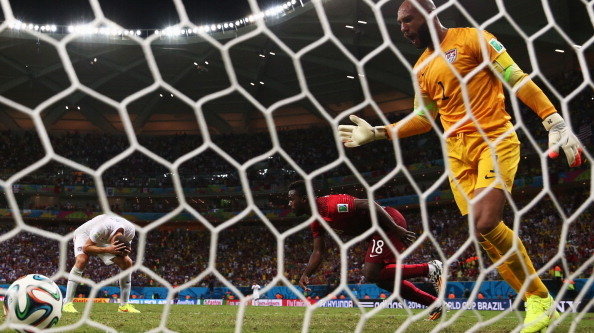
I believe that history will remember 2014 as the year the United States finally started caring about soccer. I was impressed during the first tournament win against Ghana, but I was hesitant to watch the next game. I was certain that Portugal would knock Team USA out of contention, but I was happy that my American friends were following the game,along with 25 million other Americans. As the game progressed, I tensed up into a tight little ball, stress-eating tortilla chips on the couch. After his first mistake, keeper Tim Howard made save after incredible save. Before the referee called overtime, it looked like Team USA was going to escape the “Group of Death.”

And then, the heartbreaking last minute. That the American team had just broken my heart meant that my allegiance was truly split down the middle. What did this mean about my Mexican-ness? Could I be a part of la raza and cheer for both teams?

I retreated to my bed, scrolling Twitter for other people’s reactions to understand what had just happened. Everybody in my network was in a state of total disbelief. It’s that kind of emotion that makes me love soccer, no matter how it makes me feel.

‘El Equipo De Todos’

My mom’s enthusiasm for the American team makes me think my die-hard Mexico approach has been all wrong. She cheers for whomever she wants to win without worrying about the identity politics. Then again, she has a much simpler answer to “but where are you really from?”

There’s no Latino/Chicano/Tejano/Immigrant team for me to identify with, so who am I really for? It’s a question that I’ve been asking since my family moved to this country in 1996. Back then, I told everyone that one day I would plant the Mexican flag on the moon, but before that, I was going to represent the U.S. as an Olympic rhythmic gymnast. By the 2012 Olympics, I found myself identifying with the independent athletes, competing without a country’s flag.

I asked the Latinos in my network whom they’re cheering for, and the results were pretty mixed. Some root for their family’s country; others just cheer for Team USA because they feel completely American.

Many of them unapologetically cheer for both teams, and they’re the happy majority. Univision is tapping into this double patriotism by referring to the U.S. team as “el equipo de todos” — everybody’s team.

Whether their roots are Mexican, Colombian or Chilean, when a Latino chooses to be a Team USA supporter, the chance of “my team” winning goes up 100 percent. And by alternating between two different jerseys, two different patrias, they’re saying, I’m from here AND I’m from there.

‘Columbusing’: The Art Of Discovering Something That Is Not New

ap451067002974_custom-b47300b75acaff984f1e8be6c02545b8dc25c875-s1500-c85

Get the full story at NPR

If you’ve danced to an Afrobeat-heavy pop song, dipped hummus, sipped coconut water, participated in a Desi-inspired color run or sported a henna tattoo, then you’ve Columbused something.

Columbusing is when you “discover” something that’s existed forever. Just that it’s existed outside your own culture, nationality, race or even, say, your neighborhood. Bonus points if you tell all your friends about it.

Why not? In our immigrant-rich cities, the whole world is at our doorsteps.

Sometimes, though, Columbusing can feel icky. When is cultural appropriation a healthy byproduct of globalization and when is it a problem?

All The Rage

Buzzfeed Food published an article asking, “Have you heard about the new kind of piethat’s all the rage lately?” It’s a hand pie, a little foldover pie that you can fit in your hand. They have flaky crusts and can be sweet or savory. You know, exactly like an empanada, a Latin American culinary staple.

On face value, it seems stupid to get worked up over an empanada. I mean, it’s just a pastry, right? But “discovering” empanadas on Pinterest and calling them “hand pies” strips empanadas of their cultural context. To all the people who grew up eating empanadas, it can feel like theft.

Feeling Overlooked

When it comes to our culinary traditions, Latinos are used to feeling robbed.

Latino activists spoke out in May when Chipotle announced plans to print original stories by famous writers on its paper goods and failed to include any Mexican-Americans or Latinos on the roster. The American-owned chain can profit from Mexican culture while overlooking the harsh reality of how Latinos have been treated in this country.

On Cinco de Mayo, chef Anthony Bourdain asked why Americans love Mexican food, drugs, alcohol and cheap labor but ignore the violence that happens across the border. “Despite our ridiculously hypocritical attitudes towards immigration,” writes Bourdain, “we demand that Mexicans cook a large percentage of the food we eat, grow the ingredients we need to make that food, clean our houses, mow our lawns, wash our dishes, look after our children.”

It’s frustrating when even the staunchest anti-immigration activists regularly eat Mexican food. It seems like a paradox to relish your fajitas while believing the line cook should get deported.

Admittedly, cultural appropriation is an integral and vital part of American history. And one day, empanadas might become as American as pizza (yes, I appreciate the irony of that statement). But the day when Latinos are considered as American as Italian-Americans, well, that feels further away.

Why It Hurts

The condolence prize for being an outsider is that you can take solace in the cultural traditions that make you unique. When outsiders use tweezers to pick out the discrete parts of your culture that are worthy of their attention, it feels like a violation. Empanadas are trendy, cumbia is trendy, but Latinas are still not trendy.

Code Switch blogger Gene Demby writes, “It’s much harder now to patrol the ramparts of our cultures, to distinguish between the appreciators and appropriators. Just who gets to play in which cultural sandboxes? Who gets to be the bouncer at the velvet rope?”

Playing Explorer

Of course, there is no bouncer, but we can be careful not to Columbus other culture’s traditions. Before you make reservations at the hottest fusion restaurant or book an alternative healing therapy, ask yourself a few questions:

Who is providing this good or service for me?

Am I engaging with them in a thoughtful manner?

Am I learning about this culture?

Are people from this culture benefiting from my spending money here?

Are they being hurt by my spending money here?

It is best to enter a new, ethnic experience with consideration, curiosity and respect. That doesn’t mean you have to act or look the part of a dour-faced anthropologist or an ultra-earnest tourist. You can go outside your comfort zone and learn about the completely different worlds that coexist within your city. If you’re adventurous, you can explore the entire world without leaving the country and without needing a passport.

Just remember, it’s great to love a different culture and its artifacts, as long as you love the people too.